
 457*
457*By clicking on You, Agreed to our Privacy Policy & Terms of use *Disclaimer
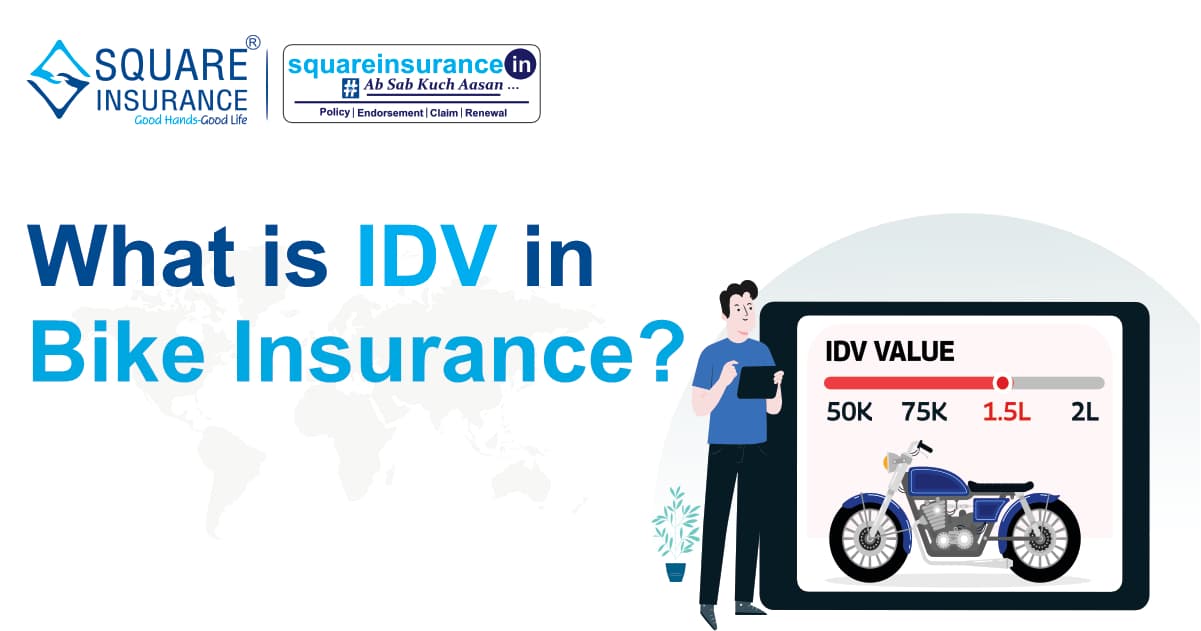
Have you ever wondered how the claim amount for your bike is actually calculated? Is it calculated based on the purchase price or something else?
The answer lies in a key concept called IDV (Insured Declared Value). It is not the original price you paid, but the current market value of your bike after depreciation.
Suppose you bought your bike for Rs 1 lakh. Over time, its value reduces due to depreciation. At the time of renewing your policy, the Insured Declared Value (IDV) might be around Rs 70,000. Now, if your bike gets stolen, the insurance company will calculate your claim based on this IDV.
In this blog, we will discuss everything about IDV in bike insurance.
IDV = Ex-showroom price of the bike - Depreciation
What is IDV in Bike Insurance
Insured Declared Value (IDV) is one of the most important terms in bike insurance.
In simple words, it is the current market value of your bike that the insurance company agrees to pay in case of a stolen or completely damaged bike.
IDV is calculated after reducing depreciation (value loss over time) from the manufacturer's price. This means that as your bike gets older, the IDV also decreases. A higher IDV means higher coverage but also a higher premium, while a lower IDV reduces your premium but may lead to lower claim settlement.
How is IDV Calculated in Bike Insurance?
The Insured Declared Value (IDV) of your bike is calculated based on its current market value, not the original purchase price. It mainly depends on the manufacturer's listed price and the depreciation applied over time.
IDV = Ex-showroom price of the bike - Depreciation
- The ex-showroom price includes the cost of the bike and fitted accessories (excluding registration and insurance costs).
- Depreciation is the reduction in value due to age and usage.
As your bike gets older, the depreciation percentage increases, and IDV reduces each year.
Note: Insurance companies usually follow standard depreciation rates set by regulatory guidelines.
IDV Calculation Example
To understand IDV in bike insurance, refer to this table:
| Particulars | Amount (Rs) |
|---|---|
| Ex-showroom Price of Bike | 1,00,000 |
| Depreciation Rate (2-3 years) | 30% |
| Depreciation Amount | 30,000 |
| Insured Declared Value (IDV) | 70,000 |
Factors Affecting IDV in Bike Insurance
The Insured Declared Value (IDV) of your bike depends on several important factors. These factors decide the current market value of your bike and, ultimately, your claim amount.
- Age of Bike As your bike gets older, its value decreases due to depreciation. This is the most important factor affecting IDV.
- Bike Model and Variant Higher-end or premium models usually have a higher IDV compared to basic variants.
- Ex-showroom Price The starting point of IDV calculation is the manufacturer's listed price of the bike (excluding registration and insurance costs).
- Depreciation Rate Insurance companies apply standard depreciation rates based on the bike's age, which reduces its value over time.
- Accessories of a Bike Additional accessories (like alloy wheels or special fittings) can increase the IDV if they are declared and insured.
- Location of Registration The city where the bike is registered can slightly impact IDV due to differences in market value and usage conditions.
- Condition of Bike A well-maintained bike may retain its value better than one with heavy wear and tear.
IDV Depreciation Rates Given By IRDAI
Below is the list showing the IRDAI-specified depreciation rates for bikes in India:
| Bike Age | Depreciation Rate |
|---|---|
| Up to 6 months | 5% |
| More than 6 months to 1 year | 15% |
| More than 1 year to 2 years | 20% |
| More than 2 years to 3 years | 30% |
| More than 3 years to 4 years | 40% |
| More than 4 years to 5 years | 50% |
| Above 5 years | Decided between insurer and policyholder |
Note: These are standard depreciation rates generally followed as per regulatory guidelines in India. Always check the rates from the IRDAI official website to get updated information.
Importance of IDV in Bike Insurance
Here are some of the important aspects of IDV in bike insurance:
- Decides Claim Amount: IDV is the maximum amount you get if your bike is stolen or fully damaged.
- Determines Premium: A higher IDV means a higher premium, and a lower IDV means a lower premium.
- Shows Current Bike Value: It reflects your bike's present market value after depreciation.
When Can You Change the IDV in a Bike Insurance?
You can change the IDV at specific times, as mentioned below:
| Scenario | Explanation |
|---|---|
| Policy Renewal | You can revise the IDV at the time of renewal to match your bike's current market value. |
| New Policy Purchase | While buying a new policy, you can choose the IDV within the range offered by the insurer. |
| Switching Insurer | When you switch insurers, you can select a new IDV based on your bike's value and the options provided by the new company. |
| Within Allowed Range | IDV can be increased or decreased within a limited range set by the insurer. |
Tips to Choose the Right IDV for Your Bike
Here are the tips to choose the right IDV for your bike:
- Check Current Market Value Always choose IDV close to your bike's real market value to get the right coverage.
- Avoid Low IDV A low IDV may reduce your premium, but it will also reduce your claim amount in the event of a loss.
- Do Not Overestimate Setting a very high IDV increases your premium without providing any additional claim benefits beyond the actual value.
- Consider Factors Older bikes should have lower IDV due to depreciation, while newer bikes can have higher IDV.
- Balanced Premium and Coverage You should choose an IDV that gives good protection without making your premium too high.
- Review IDV It is advisable to update your IDV during renewal to match your bike's current value.
Common Mistakes to Avoid While Selecting IDV
Here are some common mistakes to avoid when you want to select IDV in bike insurance:
- Choosing Too Low IDV: It may lead to a lower claim amount in total loss or theft.
- Setting Too High IDV: A high IDV increases the premium without an extra benefit.
- Ignoring Depreciation: If you do not consider depreciation, it may lead to incorrect IDV selection.
- Not Updating at Renewal: IDV may not match the current bike value.
- Not Declaring Accessories: In case of incomplete or no declaration of accessories, items will not be covered.
- Focusing Only on Premium: It can result in insufficient coverage.
Conclusion
IDV or Insured Declared Value is one of the important aspects of bike insurance. It affects the premium and coverage of your bike insurance policy.
The right IDV ensures that you get the correct claim amount in case of theft or total loss, without overpaying for your policy. It is important to keep it close to your bike's actual market value and update it at every renewal.
In simple terms, a well-selected IDV helps you to maintain the right balance between cost and protection, making your bike insurance more effective and reliable.
FAQs
IDV in bike insurance is the current market value of your bike. It is the maximum amount you can get if your bike gets stolen or damaged.
IDV in bike insurance means the insured value of your bike after depreciation. It helps you to decide your claim amount and premium.
IDV is calculated by subtracting depreciation from the bike’s ex-showroom price. As the bike gets older, the IDV decreases.
A bike insurance IDV chart shows depreciation rates based on the age of the bike. It helps you to understand how your bike’s value reduces over time.
Yes, you can choose the IDV within a range provided by the insurer. It is important to select a value close to your bike’s current market price for the right balance of premium and coverage.
 457*
457*By clicking on You, Agreed to our Privacy Policy & Terms of use *Disclaimer
- 5.5 CrRegistered Consumers
- 50+Insurance Partners
- 3.4 CrPolicies Sold


