
 2094*
2094*By clicking on You, Agreed to our Privacy Policy & Terms of use *Disclaimer
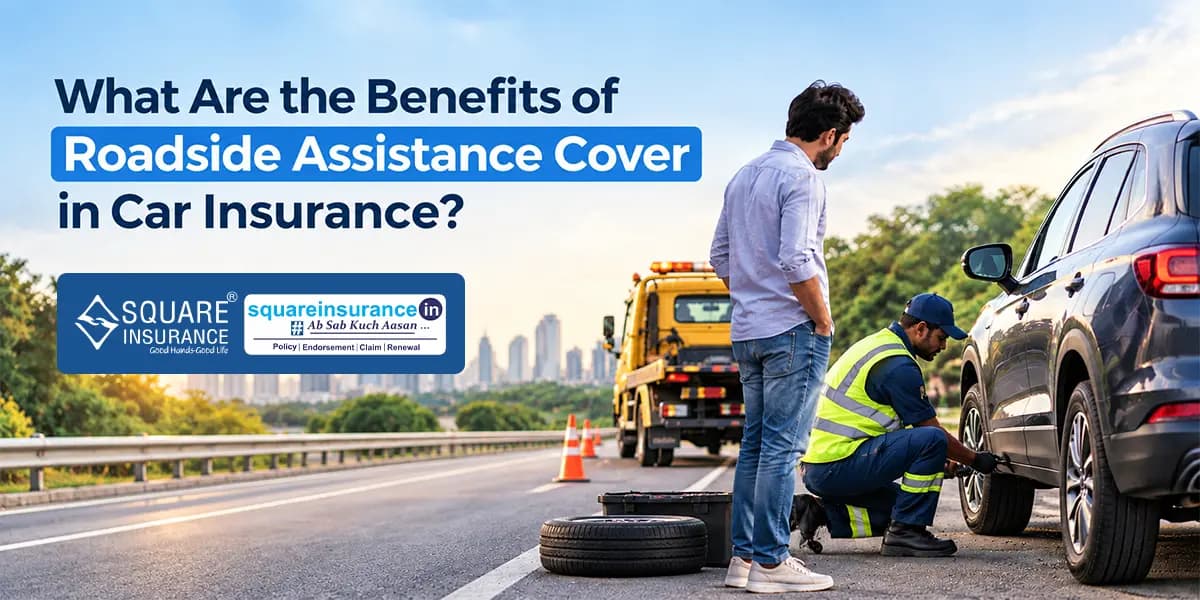
There are times when a driver can feel helpless on the road. It can happen for different reasons.
A flat tyre on a highway, a dead battery, an empty fuel tank, or a sudden mechanical problem can quickly turn a normal journey into a stressful one.
This is where car insurance roadside assistance can help. Roadside assistance is generally available as an add-on to car insurance. The services, limits, and conditions vary between insurers, so check the policy wording before buying the cover.
What Is Roadside Assistance Cover in Car Insurance?
Roadside assistance cover in car insurance is an add-on that helps when your car breaks down or becomes immobilised during a journey. Instead of finding a mechanic or tow truck yourself, you can contact your insurer or its designated service provider for help, subject to the policy terms.
How to Get RSA Benefits in 3 Steps
You can access your Roadside Assistance Cover in three simple steps:
- 1.If your car develops a problem during a journey, contact your insurer through the roadside assistance helpline.
- 2.Share your policy details and current location with the team.
- 3.The insurer will arrange the required help at your location as soon as possible, subject to the policy terms.
What Are the Benefits of Roadside Assistance Cover?
Here are the main benefits of having roadside assistance cover.
0124/7 Emergency Assistance
Car problems can happen at any time. Your car could break down early in the morning, late at night, or during a long journey.
Many roadside assistance plans provide 24/7 emergency support. This means you have a service to contact when you need help, subject to the policy terms.
02Towing Assistance
Some breakdowns cannot be fixed where the car has stopped. In such cases, roadside assistance can arrange towing to a garage.
However, towing is not necessarily unlimited. Your policy can have a maximum towing distance or other conditions.
03Battery Jump-Start Assistance
A dead battery can leave you stuck because the car will not start. Roadside assistance can arrange a battery jump-start when the problem is related to the battery.
04Flat Tyre Assistance
A flat tyre can be difficult to deal with, especially on a busy road or highway. If you do not have the tools, physical ability, or experience to change it yourself, roadside assistance can arrange help, depending on the cover.
05Emergency Fuel Delivery
Running out of fuel can bring a journey to a sudden stop. Some roadside assistance plans provide emergency fuel delivery in such situations.
The amount of fuel provided, applicable charges, and number of times you can use the service depend on the policy.
06On-the-Spot Minor Repairs
Not every breakdown requires the car to be taken to a garage. If the problem is minor and can be fixed at the location, roadside assistance can arrange a technician or mechanic to help.
07Key Lockout Assistance
Getting locked out of your car can be frustrating, especially when the keys are inside the vehicle.
Some roadside assistance plans provide help with vehicle lockouts or arrangements for keys. This service is not included in every policy, so check the cover before buying the add-on.
08Assistance During Long-Distance Journeys
A breakdown can be harder to handle when you are far from home. You might not know which garage to contact, whether a mechanic is available nearby, or how to arrange towing.
This is where roadside assistance can be useful, particularly for people who regularly travel on highways or take long road trips.
09Peace of Mind During Roadside Emergencies
One of the main benefits of roadside assistance is knowing that you have someone to contact when your car breaks down.
Instead of trying to arrange everything yourself, you can contact the assistance service and get the required help, subject to the policy terms.
Key Expenses Covered Under Roadside Assistance
Here are the common expenses that generally get covered under RSA cover:
- Towing the vehicle
- Labour for certain minor repairs
- Emergency fuel assistance
- Assistance for a flat tyre
- Battery jump-start assistance
- Other eligible roadside assistance services
Note: The exact expenses covered, limits, and conditions differ between insurers. Always check your policy documents before relying on a particular benefit.
What Expenses Are Not Covered Under Roadside Assistance?
Roadside assistance does not mean that every expense arising from a breakdown will be paid by the insurer. Depending on the policy, you might have to pay for:
- Replacement parts
- Major repairs
- Repair costs beyond the permitted limit
- Software faults in the EV
- Extra labour charges
- Fuel beyond the covered amount
- Towing beyond the permitted distance
- Services outside the covered area
- Expenses that fall outside the policy conditions
Note: The exact exclusions depend on the policy, so check the terms before assuming an expense will be covered.
Things to Check Before Buying Roadside Assistance Cover
Before adding roadside assistance to your car insurance, check what the cover actually provides.
01Services Included
Check whether the plan provides the roadside assistance you are most likely to need, such as:
- Towing
- Battery jump-start
- Flat tyre assistance
- Fuel delivery
- Minor repairs
- Key assistance
02Usage Limits
Find out how many times you can use roadside assistance during the policy period. Some plans have limits on the number of service requests or specific services.
03Towing Limits
If towing is important to you, check whether it comes with:
- Distance limit
- Specific garage or service network
- Particular geographical area
- Additional charges
04Extra Charges
Roadside assistance does not necessarily cover every expense related to a breakdown. Check whether you need to pay for:
- Replacement parts
- Extra labour
- Fuel supplied
- Towing beyond the permitted limit
- Services outside the covered area
05Vehicle Eligibility
Some insurers have conditions based on the age or type of vehicle. These rules differ between insurers, so check the eligibility requirements of the plan you are considering.
06Process to Request Assistance
Know how to contact your insurer for roadside assistance. This could be through a helpline, app, or another service-request process. Save the relevant contact details on your phone. If your car breaks down, you will not have to search for them.
07Driving Habits
Roadside assistance can be particularly useful if you:
- Frequently travel long distances
- Drive on highways
- Travel alone
- Use an older vehicle
- Regularly drive in remote areas
Conclusion
Roadside assistance in insurance is designed to help when your car breaks down or becomes stranded during a journey. Its value is not only about saving money. It also gives you a way to get help when your car stops working and you are unsure what to do next.
Before buying the cover, check the services, usage limits, towing limits, exclusions, and additional charges. The exact benefits depend on the insurer and policy wording, so choose the cover based on what you are actually likely to need.
FAQs
Roadside assistance is generally offered as an optional add-on rather than being automatically included in every car insurance policy. Its availability and eligibility depend on the insurer and policy.
Depending on the policy, roadside assistance can cover services such as towing, battery jump-starts, flat tyre assistance, emergency fuel delivery, minor repairs, and key assistance.
Yes, towing assistance is commonly included in roadside assistance plans. However, the towing distance, destination, and other conditions can vary between policies.
Many roadside assistance plans provide help with flat tyres. However, the exact service and applicable limits depend on the policy.
Some roadside assistance plans provide emergency fuel delivery. The quantity, charges, and usage limits depend on the policy terms.
It can be useful during long-distance journeys because finding a mechanic or towing service can be harder when you are far from home or travelling through an unfamiliar area.
Roadside assistance is an assistance service, but how its use affects claims or benefits such as the No Claim Bonus depends on the specific policy. Check your insurer's terms before assuming that using the service will have no effect.
It depends on your driving habits, vehicle, and the assistance already available to you. If you regularly take long trips or want support during unexpected breakdowns, the add-on can be useful. Compare its services, limits, and premium before deciding.
 2094*
2094*By clicking on You, Agreed to our Privacy Policy & Terms of use *Disclaimer
- 5.5 CrRegistered Consumers
- 50+Insurance Partners
- 3.4 CrPolicies Sold


