
 2094*
2094*By clicking on You, Agreed to our Privacy Policy & Terms of use *Disclaimer
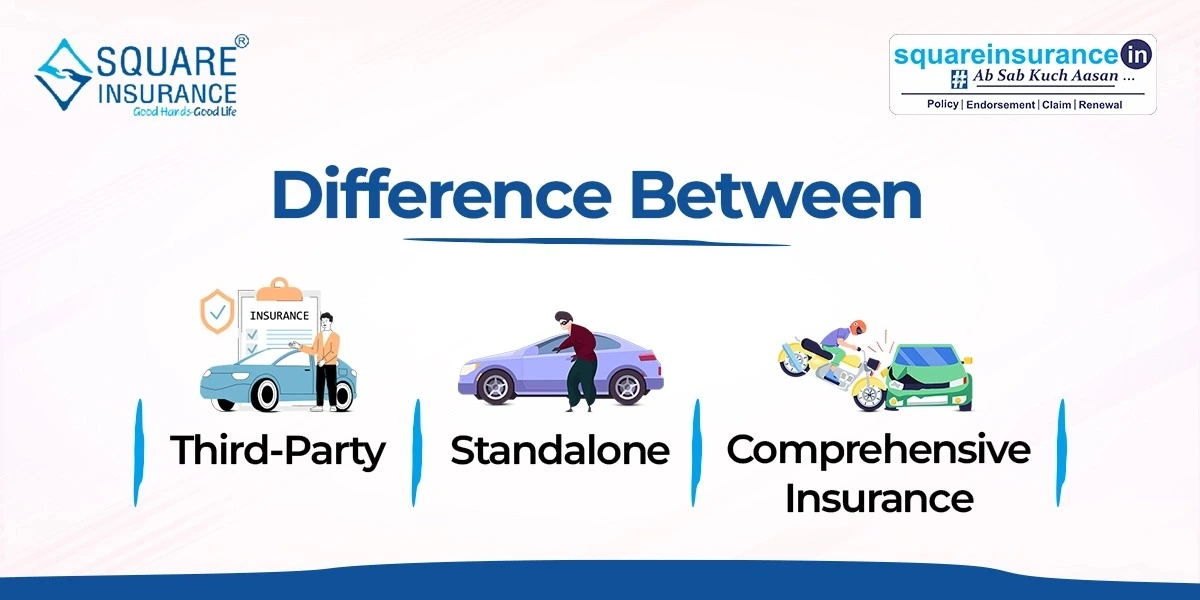
What is the first thing you decide while buying your car insurance policy? The type of car insurance you need to buy, i.e., third-party, standalone, or comprehensive.
Third-party insurance covers only the damage caused to others, standalone own-damage insurance protects just your car, and comprehensive insurance gives overall coverage in one plan. Each plan offers a different level of protection, and understanding the difference helps you pick the one that suits your needs.
This guide explains each one in simple words so you can make a smart and confident choice.
Differentiation Between Third-Party, Standalone, and Comprehensive Car Insurance Policies
Here is the tabular representation for explaining the difference between third-party, standalone, and comprehensive car insurance:
| Basis | Third-Party Car Insurance | Standalone Car Insurance | Comprehensive Car Insurance |
|---|---|---|---|
| Coverage type | Only third-party damage | Only own-damage | Own-damage + third-party |
| Legal requirement | Mandatory by law | Not mandatory | Not mandatory |
| Premium cost | Lowest | Medium | Highest |
| Damage to own car | Not covered | Covered | Covered |
| Third-party injury | Covered | Not covered | Covered |
| Third-party property loss | Covered | Not covered | Covered |
| Add-ons availability | Limited | Available | Many add-ons available |
| Level of protection | Basic | Moderate | Maximum |
| Best for | Old or low-value cars | Cars needing own-damage cover | New or high-value cars |
| Overall choice | Cheapest option | Balanced option | Most complete option |
Inclusion and Exclusion of Third-Party, Standalone, and Comprehensive Car Insurance
Understanding the inclusions and exclusions of Third-Party, Standalone, and Comprehensive Car Insurance helps identify coverage and exclusions. This makes it easier to choose the right protection for a car.
1 Inclusions and Exclusions of Third-Party Car Insurance
What Does It Cover?
- Injury or death of a third party
- Damage to third-party property
- Legal liability expenses
- Personal accident cover, but only as an add-on
What Does It Not Cover?
- Damage to the insured car
- Loss of the car due to fire, theft, or natural disasters
- Coverage for illegal or drunk driving
- Mechanical or wear and tear of car parts
2 Inclusions and Exclusions of Standalone Car Insurance
What Does It Cover?
- Damage to the insured car
- Accident-related damage to the insured car
- Loss or damage caused by fire, theft, or natural disasters
What Does It Not Cover?
- Third-party damage or injury
- Loss caused by drunk or illegal driving
- When the car is driven without a valid license
- Mechanical breakdown or wear-and-tear
- Damage caused by war or nuclear events
3 Inclusions and Exclusions of Comprehensive Car Insurance
What Does It Cover?
- Own-damage and third-party liabilities
- Expenses caused by accidents, fire, theft, natural, and man-made disasters
- Third-party property damage, injury, or death
- The insured also gets multiple extra benefits with add-ons
What Does It Not Cover?
- Expenses caused by drunk or illegal driving
- Driving with an invalid license
- The wear and tear of car parts
- The mechanical breakdown of the car
- War, mutiny, or nuclear risks
Factors to Consider Before Choosing a Car Insurance Type
Selection of the right car insurance becomes easier when a few key factors are kept in mind. These factors help decide which plan offers the best protection for your car:
1 Car age
The age of the car matters. New cars usually need more protection, while older cars may work fine with basic coverage.
2 Car value
Expensive cars need stronger insurance because their repair costs are high. Low-value cars may not need full coverage.
3 Usage frequency
If the car is used every day, the chance of damage is higher. In such cases, a plan with more coverage is safer. If the car is used rarely, basic insurance may be enough.
4 Location risks
Where the car is parked or driven also affects the choice. Areas with heavy traffic, theft, or accident risks need better protection.
5 Budget
Insurance plans come at different prices. Choose a plan that fits the budget while still offering enough safety.
6 Add-on needs
Add-ons like zero depreciation, roadside assistance, or engine protection offer extra help. Pick them only if they are needed, as they increase the premium.
Which is the Best: Third-Party, Standalone, or Comprehensive Car Insurance?
Choosing the best car insurance plan depends on what the buyer needs and prefers.
Third-party insurance is good for basic legal safety and costs less. Standalone insurance is useful when only your car needs protection. Comprehensive insurance gives the most safety because it covers both your car and third-party damage.
The right choice depends on
- How old your car is
- How much do you use it
- Your budget
- The level of protection you want
Get the answer to the above four questions, and you will be able to choose the suitable plan for your car.
Conclusion
Choosing the right car insurance becomes easier when the differences between third-party, standalone, and comprehensive plans are clear.
Each option offers a unique level of protection that suits different needs, budgets, and car types. Third-party insurance fulfils legal requirements, standalone covers only the car, and comprehensive provides the widest safety net.
By going through inclusions, exclusions, and key factors, it becomes simpler to select a plan that offers the right coverage.
FAQs
Third-party covers damage to others, standalone covers only your car, and comprehensive covers both.
Only third-party car insurance is mandatory by law.
Comprehensive gives more protection, but the best choice depends on budget, car age, and need.
Add-ons are available with standalone and comprehensive plans. But not in third-party insurance.
Standalone insurance works well when the car already has third-party cover but needs only own-damage protection.
No, it covers most things but excludes wear and tear, illegal driving, mechanical failure, and war-related damage.
 2094*
2094*By clicking on You, Agreed to our Privacy Policy & Terms of use *Disclaimer
- 5.5 CrRegistered Consumers
- 50+Insurance Partners
- 3.4 CrPolicies Sold


