
 2094*
2094*By clicking on You, Agreed to our Privacy Policy & Terms of use *Disclaimer
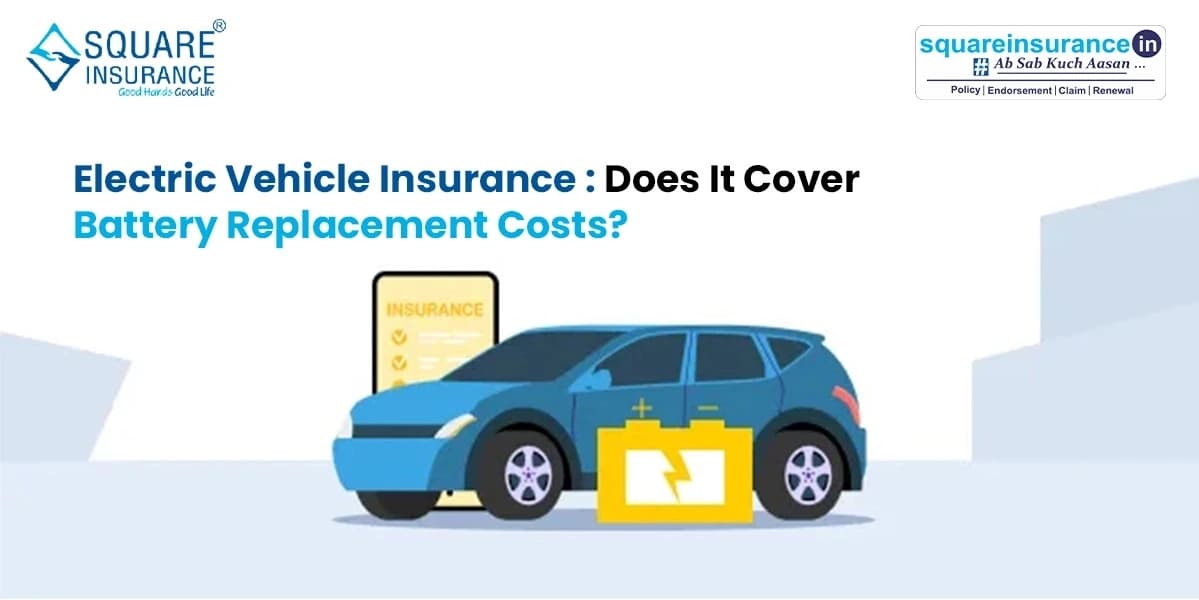
Car insurance is important for every car. No matter whether it is a petrol, diesel, or electric car!
But when it comes to electric vehicles (EVs), one question often comes to mind - does insurance cover battery replacement costs? Since the battery is one of the most expensive parts of an EV, understanding its coverage becomes very important.
Not all car insurance policies cover battery damage in the same way. The coverage depends on the type of policy, the situation, and any add-ons you choose.
In this blog, we will discuss EV car insurance costs in India and their coverage.
- Accidents or collisions
- Fire or short circuit
- Natural disasters like floods
- Theft or vandalism
Need for Battery Replacement
The need for battery replacement may arise for any reason. Some of them include:
- Battery capacity drops significantly over time.
- The driving range starts declining.
- Charging takes longer than usual.
- Frequent battery-related warnings appear.
- Battery performance becomes inconsistent.
- Physical damage or swelling is noticed.
- The manufacturer's warranty period is over.
What Does EV Car Insurance Cover?
EV insurance works like regular car insurance but may include add-ons designed for electric vehicle components. It provides financial protection against financial and legal risks to electric car owners.
A standard EV insurance policy usually covers the following:
- Accidental damage: EV car insurance covers repair costs if your EV is damaged in an accident.
- Theft: It also helps you when your vehicle is stolen.
- Fire and natural disasters: You will get coverage against the damage due to fire, flood, earthquake, or storms under EV car insurance.
- Man-made events: It covers damage due to riots, vandalism, or similar incidents.
- Third-party liability: It helps you to deal with injury, death, or property damage caused to others.
Does Electric Car Insurance Cover Battery Replacement Costs?
Electric car insurance may cover battery replacement, but only in certain situations. In a comprehensive EV insurance policy, the battery is usually covered in case of:
- Accidents or collisions
- Fire or short circuit
- Natural disasters like floods
- Theft or vandalism
However, battery replacement is not covered in normal conditions, such as:
- Wear and tear or battery ageing
- Improper charging or use of unauthorised equipment
- Ignoring manufacturer guidelines
To get maximum protection, you can also go for a Battery Protection Add-on. This add-on helps to cover repair or replacement costs if the battery is damaged due to issues like water ingress, short circuit, or power surge.
What is Not Covered in Electric Vehicle Insurance?
Just like any other insurance, electric car insurance does have some exclusions. It includes:
- Normal wear and tear, such as tyres, brake pads, and battery ageing.
- Mechanical or electrical breakdown
- Driving without a valid licence
- Driving under the influence of alcohol or drugs
- Battery damage due to negligence or wrong charging
- Using a private EV for commercial use
- War, nuclear risks, or similar events
- Accidents outside India
- Consequential damage (ignoring small issues)
Add-ons to Safeguard Electric Car Battery
If battery safety is your priority, then pick an additional battery protection cover. Here are some of the main add-ons to protect your battery through EV car insurance:
- Battery Protection Cover Battery protection add-on directly covers battery damage caused by water, fire, or short circuits, which are common risks for EVs.
- Zero Depreciation Cover Zero depreciation is a smart financial backup. It helps you to get a higher claim amount by reducing depreciation cuts on expensive parts like the battery.
- Charging Equipment Cover This add-on covers the essentials you use daily, like your charger and cables, in case they get damaged during charging.
Factors that Affect EV Car Insurance Cost in India
Here are some of the key factors that affect EV car insurance cost in India:
| Factor | How It Affects Cost |
|---|---|
| Car price (IDV) | Expensive EV = higher insurance premium |
| Battery capacity | Bigger battery = higher cost |
| Type of insurance | Third-party is cheaper, comprehensive costs more |
| Add-ons | Extra covers (battery, zero dep) increase the premium |
| City/location | Metro cities usually have higher premiums |
| Driving history | No claims = lower cost (No Claim Bonus) |
| Car usage | More usage = higher risk = higher premium |
| Age of vehicle | New cars cost more to insure than old ones |
How to Maintain the Good Life of Your EV Battery?
You can maintain the life of your EV battery with simple steps. To do so, you have to:
- Avoid charging your battery to 100% every time.
- Do not let the battery drain to 0% frequently.
- Use the recommended charger.
- Restrict the excessive use of fast charging.
- Park your EV in shaded or cool areas.
- Drive smoothly without harsh acceleration or braking.
- Keep your EV software updated regularly.
- Follow the recommended service schedule.
Conclusion
Electric cars have different parts from petrol cars. So, their insurance requirements also differ. A good EV insurance plan not only covers accidents but also protects expensive components like the battery through useful add-ons.
So, it becomes important to understand inclusions and exclusions to avoid unexpected costs. Also, you should maintain your EV battery properly to improve its life and performance.
By choosing the right policy and taking basic care, you can enjoy a smooth driving experience.
FAQs
No, EV insurance can be similar or slightly higher, which depends on different factors. Some of the factors include the car type and coverage.
Yes, only if you have a battery protection add-on. In general insurance, a battery is covered under certain situations only.
No, basic plans usually do not fully cover battery damage.
Battery protection cover is one of the most important add-ons.
Most EV batteries last around 5 to 8 years, depending on usage.
Yes, you can easily buy and renew EV insurance online.
The cost depends on the car model, battery size, coverage type, and add-ons you choose.
 2094*
2094*By clicking on You, Agreed to our Privacy Policy & Terms of use *Disclaimer
- 5.5 CrRegistered Consumers
- 50+Insurance Partners
- 3.4 CrPolicies Sold


