
 2094*
2094*By clicking on You, Agreed to our Privacy Policy & Terms of use *Disclaimer
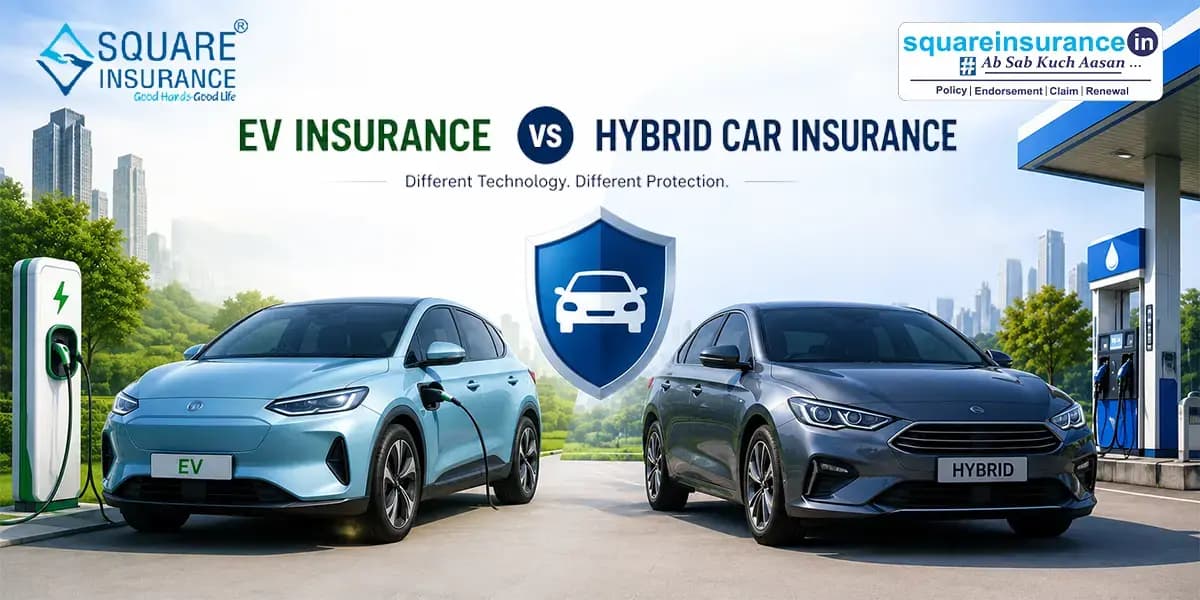
- EV insurance and hybrid car insurance offer similar basic coverage, but their premiums, repairs, and add-ons are different.
- EV insurance focuses on battery and electric components, while hybrid car insurance covers both the engine and electric system.
- Electric vehicles usually have higher insurance premiums due to high battery replacement and repair costs.
- Always choose an insurance policy that matches your vehicle type for the right protection.
According to a July 2026 report, over 40% of passenger vehicle retail sales in India in June 2026 were CNG, hybrid, and electric vehicles. It clearly indicates the growing shift towards cleaner and more fuel-efficient mobility. Among these options, electric vehicles (EVs) and hybrid cars have become popular choices for buyers.
While both offer modern technology and lower emissions, their insurance requirements are not the same. Factors such as battery systems, repair costs, coverage options, and premiums can differ significantly between EVs and hybrid cars.
In this blog, we will compare EV insurance vs hybrid car insurance to help you choose the right insurance for your vehicle.
EV Insurance vs Hybrid Car Insurance in India: Understanding the Difference
Electric Vehicle Insurance and Hybrid Car Insurance offer similar basic coverage, such as protection against accidents, theft, fire, natural disasters, and third-party liabilities. However, they differ in terms of vehicle technology, repair costs, premiums, and coverage needs.
The table below highlights the key differences:
| Feature | EV Insurance | Hybrid Car Insurance |
|---|---|---|
| Vehicle Type | Fully electric vehicle | Vehicle with both electric motor and petrol/diesel engine |
| Insurance Premium | Usually higher | Usually lower |
| Repair Cost | Higher due to battery and specialised parts | Comparatively lower |
| Repairs | Require specialised technicians | Easier to repair with a wider service network |
| Battery Cover | More important due to expensive battery | Available but less frequent |
| Common Add-on | Battery Protection, EV Roadside Assistance | Engine Protection, Battery Cover, Roadside Assistance |
How Insurance Requirements Differ for EVs and Hybrid Cars
Electric vehicles (EVs) run entirely on electricity stored in a battery, whereas hybrid cars use both an electric motor and a petrol or diesel engine. This directly indicates that the parts that require coverage also differ.
Understand With Example
Imagine Rahul buys an electric car, while Aman buys a hybrid car. Both purchase comprehensive car insurance, but their insurance needs are not the same.
If Rahul's EV battery gets damaged due to water ingress or a short circuit, repairing or replacing it can be expensive. That's why Battery Protection Cover becomes an important add-on for EV owners.
On the other hand, Aman owns a hybrid car with both a petrol engine and an electric motor. Besides protecting the battery, he may also need an Engine Protection Cover, as repairs to the engine can also be costly.
Because the technology is different, insurers recommend different coverage options and add-ons for EVs and hybrid cars.
In Simple Terms
- If you own an electric vehicle, choose EV insurance that protects the battery and other EV-specific components.
- Hybrid car insurance is suitable if you need coverage for both the petrol/diesel engine and the electric system.
Common Claims You Can Make for EVs and Hybrid Cars
This table will help you understand the common claims covered under EV insurance vs hybrid car insurance:
| Claim Type | Does EV Cover? | Does Hybrid Car Insurance Cover? |
|---|---|---|
| Accident damage | Yes | Yes |
| Third-party liability | Yes | Yes |
| Theft | Yes | Yes |
| Fire damage | Yes | Yes |
| Natural disaster damage | Yes | Yes |
| Battery damage | Yes | Yes |
| Battery short circuit | Yes | Yes |
| Water ingress damage to battery/electrical system | Yes | Yes |
| Charging equipment damage* | Yes | No |
| Electric motor damage | Yes | Yes |
| Petrol/Diesel engine damage | No | Yes |
| Fuel system damage | No | Yes |
How to Choose Between EV Insurance and Hybrid Car Insurance
The answer is simple and obvious. If you have an electric car, then you should buy EV car insurance. In the case of a hybrid car, get hybrid car insurance for yourself. The insurance policy should always match your vehicle type to ensure the right protection.
Factors to Consider Before Buying EV or Hybrid Car Insurance: Comparison
The right insurance policy depends on more than just the premium. Before buying EV or hybrid car insurance, compare these important factors to ensure your vehicle gets the right protection.
Roadside Assistance (RSA)
Roadside Assistance (RSA) helps if your vehicle breaks down while you're on the road. It can include towing, flat tyre assistance, battery jump-start, emergency fuel delivery (for hybrids), and other on-road support.
For EV owners, RSA is more important because India's charging infrastructure is still developing. Although charging stations are increasing, the availability remains limited to metro cities and on major highways. If your EV runs out of charge or develops a technical fault in a remote area, finding immediate help can be difficult.
For hybrid cars, RSA is still useful but usually less critical. Since hybrid vehicles also have a petrol or diesel engine, they are less likely to leave you stranded because of battery-related issues alone.
Cashless Garage Network
A cashless garage is an authorised workshop where the insurer settles the repair bill directly with the garage. You only pay for expenses that are not covered under the policy.
This is especially important for EV owners. Repairing an electric vehicle requires specialised technicians and equipment, and not every garage in India is equipped to handle EV repairs. Before buying insurance, check whether the insurer has EV-authorised cashless garages in your city or nearby areas.
Hybrid cars have an advantage here. Since they share many components with conventional cars, authorised repair centres are more widely available across India, making cashless repairs easier.
Available Add-ons
Add-ons in car insurance increase your insurance coverage by protecting parts and situations that a standard policy does not cover.
For an EV, consider add-ons like:
- Battery Protection Cover
- Zero Depreciation Cover
- Consumables Cover
- EV Roadside Assistance
For a hybrid car, useful add-ons include:
- Engine Protection Cover
- Zero Depreciation Cover
- Roadside Assistance
- Consumables Cover
Instead of buying every available add-on, choose those that match your vehicle and driving conditions.
Premium Cost
The premium is the amount you pay to keep your insurance policy active. It varies depending on factors such as the vehicle's value, repair cost, location, claim history, and coverage.
Factors That Influence the Insurance Premium
| Factors | EV Insurance | Hybrid Car Insurance |
|---|---|---|
| Battery Value | The battery makes up 30% to 40% of the vehicle's value. This increases the IDV and premium. | A smaller battery has less impact on the premium |
| Repair Cost | Higher due to specialised technicians and expensive parts. It automatically enhances the premium cost. | Comparatively lower with easier access to spare parts |
| Risk Assessment | Higher replacement cost and limited claim history can increase premiums | More established claim history and repair network help to keep premiums lower. |
Conclusion
In the end, both policies provide coverage to different types of vehicles, so it becomes important to buy as per your vehicle type. If you own an electric car, choose an insurance policy that offers adequate protection for the battery, charging equipment, and other EV-specific components.
If you drive a hybrid car, look for coverage that protects both the conventional engine and the electric system.
FAQs
The cost of EV insurance is generally 20% to 40% higher than hybrid car insurance. This is because electric vehicles have expensive battery packs, advanced electronic components, and higher repair costs.
In India, EV insurance is designed for fully electric vehicles. It focuses on protecting the battery and other electric components. Hybrid car insurance covers vehicles with both an electric motor and a fuel engine.
Battery replacement does not get covered under a standard policy unless the damaging reason covered. A Battery Protection Cover add-on can provide additional protection.
No, the insurance policy should match your vehicle type, as EVs and hybrid cars have different components and coverage requirements.
Electric vehicles usually have higher insurance premiums because their batteries and electronic components are more expensive to repair or replace.
Yes, it is useful for both, but it is especially beneficial for EV owners, as it can help if the vehicle
 2094*
2094*By clicking on You, Agreed to our Privacy Policy & Terms of use *Disclaimer
- 5.5 CrRegistered Consumers
- 50+Insurance Partners
- 3.4 CrPolicies Sold


