
 2094*
2094*By clicking on You, Agreed to our Privacy Policy & Terms of use *Disclaimer
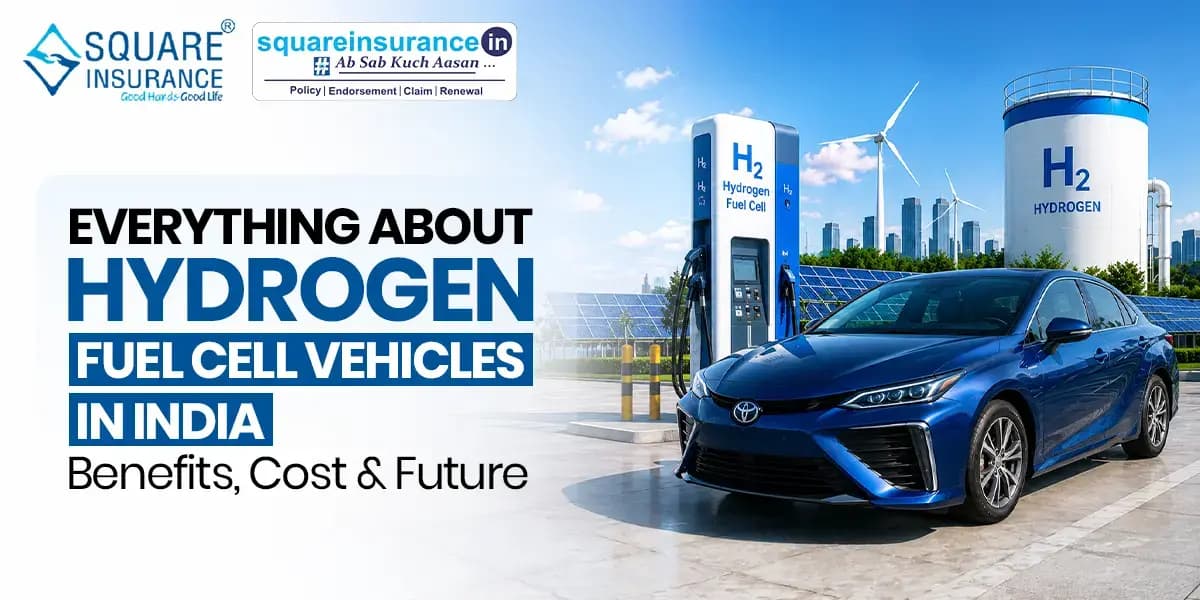
As India accelerates its transition towards clean mobility, hydrogen fuel cell vehicles (HFCVs) are gaining attention as a zero-emission alternative to conventional fuel-powered vehicles.
To support this shift, the Government of India launched the National Green Hydrogen Mission in 2023, with a target of producing 5 million metric tonnes of green hydrogen annually by 2030.
But what exactly are hydrogen fuel cell vehicles, how do they work, and are they a practical option for India? This blog explains hydrogen fuel cell benefits, cost, challenges, and future in simple words.
What Are Hydrogen Fuel Cell Vehicles?
Hydrogen Fuel Cell Vehicles (HFCVs), also known as Fuel Cell Electric Vehicles (FCEVs), are electric vehicles that generate their own electricity while driving.
Instead of depending on a large rechargeable battery, they use a fuel cell stack that combines compressed hydrogen gas with oxygen from the air to produce electricity. This powers the vehicle's electric motor while only releasing water vapour and heat. This makes hydrogen fuel cell vehicles a cleaner alternative to conventional petrol and diesel vehicles.
Hydrogen Fuel Cell Vehicle Components
| Component | Purpose |
|---|---|
| Hydrogen Tank | Stores compressed hydrogen |
| Fuel Cell Stack | Produces electricity |
| Electric Motor | Drives the wheels |
| Battery | Stores regenerative braking energy |
| Power Control Unit | Controls electricity flow |
How Do Hydrogen Fuel Cell Vehicles Work?
Hydrogen fuel cell vehicles generate electricity inside the vehicle instead of storing it in a large rechargeable battery. Here's how the process works:
- 1.Hydrogen is Stored: Compressed hydrogen gas is stored in high-pressure tanks inside the vehicle.
- 2.Enters the Fuel Cell: The hydrogen is sent to the fuel cell stack.
- 3.Electricity is Generated: Inside the fuel cell, hydrogen combines with oxygen from the air to produce electricity through an electrochemical reaction.
- 4.The Vehicle Moves: Electricity powers an electric motor that drives the vehicle.
- 5.Only Water is Emitted: The only by-products of this process are water vapour and heat. This makes the vehicle tailpipe-emission-free.
Benefits of Hydrogen Fuel Cell Vehicles
Hydrogen fuel cell vehicles offer several advantages over conventional fuel-powered vehicles and battery electric vehicles. Some of the hydrogen fuel cell benefits include:
- Long Driving Range: Most hydrogen fuel cell vehicles can travel 600 to 700 km or more on a full tank. This makes them ideal for long-distance journeys.
- Quick Refuelling: Refuelling a hydrogen tank takes only 3 to 5 minutes. It offers convenience similar to petrol and diesel vehicles.
- Zero Tailpipe Emissions: Hydrogen fuel cell vehicles emit only water vapour and heat, which reduces pollution.
- Suitable for Heavy Vehicles: Hydrogen technology is ideal for buses, trucks, and other commercial vehicles because it delivers long range without the added weight of large battery packs.
- Reliable in Cold Weather: Hydrogen fuel cells generally maintain their efficiency and driving range even in low temperatures, unlike some battery electric vehicles.
Challenges of Hydrogen Fuel Cell Vehicles
Despite their benefits, hydrogen fuel cell vehicles face several challenges:
- Limited Refuelling Stations: Availability of very limited hydrogen refuelling stations in India.
- High Vehicle Cost: Hydrogen fuel cell vehicles are costly because fuel cells use expensive materials such as platinum.
- Storage Challenges: Hydrogen needs to be stored in high-pressure tanks, which take up more space and require specialised technology.
- Low Availability of Green Hydrogen: Most hydrogen is still produced using fossil fuels. Producing green hydrogen is cleaner but remains expensive.
- Lower Energy Efficiency: Hydrogen fuel cell vehicles use more energy to produce and deliver power than battery electric vehicles.
- Safety Requirements: Hydrogen is highly flammable. It also requires advanced storage, handling, and transportation systems to ensure safety.
Hydrogen Fuel Cell Vehicles vs Petrol vs Diesel vs Electric Vehicles (EVs)
This table will help you to understand the difference between all these energy sources for fueling vehicles:
| Basis | Hydrogen Fuel Cell Vehicle (HFCV) | Petrol Vehicle | Diesel Vehicle | Electric Vehicle (EV) |
|---|---|---|---|---|
| Energy Source | Hydrogen gas | Petrol | Diesel | Electricity stored in a battery |
| Tailpipe Emissions | Only water vapour and heat | High CO? and other pollutants | High CO?, NOx, and particulate matter | No tailpipe emissions |
| Driving Range | 500–700 km or more | 500–800 km | 600–1,000 km | 250–600 km (depends on the model) |
| Refuelling/Charging Time | 3–5 minutes | 2–5 minutes | 2–5 minutes | 30 minutes to several hours |
| Running Cost | Around Rs 4/km | High | Moderate | Lowest among the four |
| Vehicle Cost | Very high | Affordable | Moderate to high | Moderate to high |
| Infrastructure in India | Very limited hydrogen stations | Widely available fuel stations | Widely available fuel stations | Growing charging network |
| Maintenance | Expected to be lower | Moderate | Higher due to engine complexity | Low due to fewer moving parts |
| Best Suited For | Long-distance and commercial transport | Everyday personal use | Heavy-duty and long-distance travel | Daily city commuting and short to medium trips |
Cost of Hydrogen Fuel Cell Vehicles in India
Hydrogen fuel cell price more than petrol, diesel, and electric vehicles because the technology is still new. The high cost mainly comes from fuel cell systems, hydrogen storage tanks, and manufacturing.
Apart from the purchase price, hydrogen fuel also adds to the ownership cost. Hydrogen currently costs between Rs 450 and Rs 550 per kg, with an average running cost of about Rs 4 per km. Refuelling takes only 3 to 5 minutes and offers a driving range of 500 to 700 km. The limited number of hydrogen refuelling stations in India remains a major challenge.
Are Hydrogen Fuel Cell Vehicles Available in India?
Hydrogen fuel cell vehicles are currently being tested in India. Also, it is not yet available for public purchase. Consumer models are expected to launch between 2030 and 2035.
At present, hydrogen vehicles are mainly being used for pilot projects and commercial trials by manufacturers and government organisations. As hydrogen refuelling infrastructure improves and production increases, these vehicles are expected to become available to individual buyers.
Government Initiatives for Hydrogen Fuel Cell Vehicles in India
Some of the major government initiatives include:
- Pilot Projects for Hydrogen Vehicles: In 2025, the government launched five pilot projects to test hydrogen-powered buses and trucks on different routes across India. These projects will evaluate the performance, safety, and commercial use of hydrogen vehicles.
- Support Under the National Green Hydrogen Mission: The mission encourages the production and use of green hydrogen while supporting hydrogen refuelling infrastructure, research, and new technologies for transport.
- Testing Different Hydrogen Technologies: The pilot projects include both Hydrogen Fuel Cell Electric Vehicles (FCEVs) and Hydrogen Internal Combustion Engine (H2-ICE) vehicles to identify the most suitable technology for India's transport sector.
- Building Hydrogen Infrastructure: Along with vehicle trials, the government is supporting the development of hydrogen production, storage, and refuelling facilities to prepare for future commercial adoption.
Are Hydrogen Fuel Cell Vehicles Safe?
Yes, hydrogen fuel cell vehicles are designed with high safety standards. They use strong, high-pressure hydrogen tanks that undergo strict testing to withstand collisions and harsh conditions.
In the event of a leak, hydrogen rises and disperses quickly into the air, reducing the risk of fire. These vehicles are also equipped with sensors and safety systems that can detect leaks and automatically shut off the hydrogen supply if needed.
Future of Hydrogen Fuel Cell Vehicles in India
Hydrogen fuel cell vehicles are expected to become an important part of India's clean mobility plans. Under the National Green Hydrogen Mission, the government aims to produce 5 million metric tonnes of green hydrogen annually by 2030 while expanding hydrogen infrastructure.
As hydrogen production increases, refuelling stations expand, and manufacturing costs reduce, hydrogen fuel cell vehicles are expected to see wider adoption in India. Passenger vehicles are likely to enter the market after commercial deployment and improved infrastructure.
Should You Buy a Hydrogen Fuel Cell Vehicle in India?
At present, no.
Hydrogen fuel cell vehicles are not yet available for regular buyers in India. They are still being tested, and public hydrogen refuelling stations are very limited.
If you are planning to buy a vehicle today, a petrol, diesel, CNG, or electric vehicle is a more practical choice. However, if hydrogen infrastructure expands and consumer models become available in the future, hydrogen fuel cell vehicles can become a good option due to their long driving range, fast refuelling, and zero tailpipe emissions.
For now, hydrogen fuel cell vehicles are better viewed as a promising technology for the future rather than an immediate buying option in India.
Conclusion
To conclude, hydrogen fuel cell vehicles offer a clean and promising alternative to conventional fuel-powered vehicles. They provide long driving ranges, quick refuelling, and produce only water vapour as a tailpipe emission.
As government initiatives, hydrogen production, and refuelling networks continue to grow, hydrogen fuel cell vehicles are expected to play an important role in India's future of sustainable transportation.
FAQs
Hydrogen fuel cell vehicles are not available for regular buyers in India yet. When launched, they are expected to cost more than petrol, diesel, and electric vehicles because of the advanced technology used.
Hydrogen fuel cell vehicles offer a long driving range, quick refuelling, and zero tailpipe emissions. They emit only water vapour, making them a cleaner option for transportation.
A hydrogen fuel cell vehicle can usually be refuelled in 3 to 5 minutes, similar to a petrol or diesel vehicle.
No, hydrogen fuel cell vehicles are currently being tested in India and are not yet available for public purchase.
Both have their own advantages. Hydrogen vehicles are better for long-distance travel and heavy vehicles, while electric vehicles are more practical for daily city driving.
Most hydrogen fuel cell vehicles can travel 500 to 700 km or more on a full tank, depending on the vehicle model.
 2094*
2094*By clicking on You, Agreed to our Privacy Policy & Terms of use *Disclaimer
- 5.5 CrRegistered Consumers
- 50+Insurance Partners
- 3.4 CrPolicies Sold


