
 2094*
2094*By clicking on You, Agreed to our Privacy Policy & Terms of use *Disclaimer
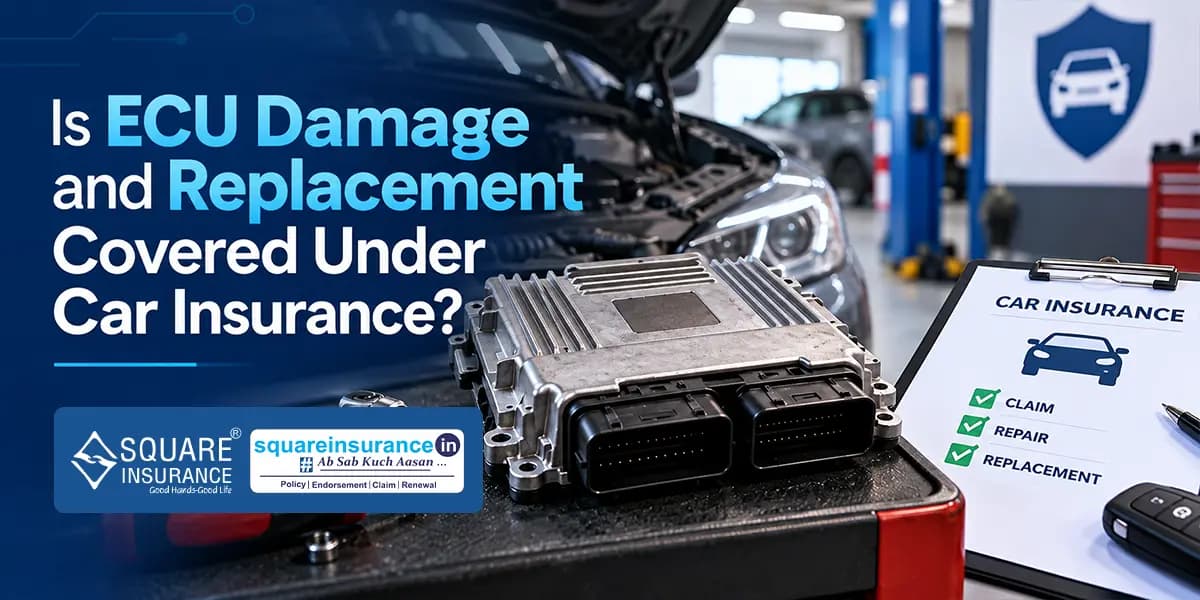
- ECU damage caused by a covered accident, fire, or theft can be covered under comprehensive car insurance.
- Water-related ECU damage needs special attention because consequential damage can be excluded under some policies.
- Normal ageing, internal electrical failure, and regular wear and tear are generally not covered.
- Third-party car insurance does not cover damage to your own car or its ECU.
- Add-ons such as Engine Protection and Zero Depreciation can provide wider financial protection, depending on the policy.
ECU damage can be an expensive problem because the Electronic Control Unit is one of the important electronic components in a modern car. A damaged ECU can affect the functioning of the engine and, in some cases, stop the vehicle from running properly.
So, what happens when the ECU gets damaged? Does it get covered in car insurance, or do you have to pay it out of pocket?
The answer depends mainly on how the ECU was damaged and what your policy covers.
What Is an ECU in a Car?
ECU stands for Electronic Control Unit. It is an onboard computer that receives information from different sensors and processes it to control the engine. Since the ECU controls several important engine functions, damage to it can affect the overall performance of the vehicle.
Some of its important functions include:
- Managing the fuel-air mixture for efficient combustion
- Controlling ignition timing and engine speed
- Managing emission systems to meet regulatory requirements
Does Car Insurance Cover ECU Damage?
Yes, coverage for ECU damage in car insurance is possible. However, coverage depends on the cause of damage and the terms of your policy.
For example, an ECU damaged in a collision can be treated differently from an ECU that stops working because of an internal electrical fault.
When Is ECU Damage Covered Under Car Insurance?
Here is a quick look at situations where ECU damage can be covered.
| Cause of ECU Damage | Is It Covered? | Explaination |
|---|---|---|
| Accident or collision | Yes | - |
| Fire or lightning | Yes | - |
| Theft or vandalism | Yes | - |
| Flood or waterlogging | Conditional | Coverage depends on the policy. Consequential damage caused by attempting to start a waterlogged vehicle can be excluded. |
| Rodent or rat bites | Conditional | Coverage differs between insurers and policies. |
| Wear and tear or ageing | No | Gradual deterioration due to age is generally not covered. |
| Mechanical or electrical breakdown | No | Internal failure without a covered external event is generally treated as a breakdown. |
Note: Always check your policy wording because coverage and exclusions differ between insurers.
Why Is ECU Damage Cover Relevant in 2026?
Modern cars depend heavily on electronic systems. The ECU is part of this shift towards electronically controlled vehicle functions. This makes ECU protection relevant for today's car owners because:
- Cars use more electronic control systems than older vehicles.
- ECU repairs and replacement can be expensive. Its replacement can range from Rs 25000 to Rs 1,20,000. In case of repair, it can drop from Rs 5000 to Rs 25000.
- Waterlogging and flooding can damage sensitive electronic components.
- A minor accident can damage electronic parts even when the external damage looks limited.
- The cost of replacing an ECU can add significantly to the overall repair bill.
For this reason, checking how your policy treats ECU and related electronic components is worth doing before you need to make a claim.
When Is ECU Damage Not Covered?
Having comprehensive insurance does not mean every ECU failure is covered. You generally cannot expect coverage when the damage results from:
1Normal Wear and Tear
An ECU that deteriorates because of age or normal use is generally not covered.
Insurance is designed to cover specified risks, not the gradual ageing of vehicle components.
2Mechanical or Electrical Breakdown
If the ECU develops an internal fault or short circuit without an insured external event, the repair or replacement can fall outside the policy coverage.
3Negligence During Flooding
Water damage needs particular attention.
For example, if a car stalls after being driven through deep water and the driver tries to restart it, the resulting engine or ECU damage can be treated as consequential damage and rejected under the policy.
4Third-Party Insurance
A basic third-party policy covers your legal liability towards third parties. It does not cover damage to your own vehicle.
So, if your ECU is damaged in an accident and you have only third-party insurance, the ECU repair cost is generally your responsibility.
Which Add-ons Can Provide Wider ECU Protection?
Standard comprehensive insurance does not always cover every situation involving an ECU. Add-ons can help fill some of these gaps.
1Engine Protection Cover
The ECM (Engine Control Module) is a type of ECU that manages several engine functions. It controls the engine functions. So, it is right to state that an engine add-on will help you to provide additional protection for certain engine-related losses that are not covered under a standard policy.
- Engine ECU: Engine
- Transmission ECU: Gearbox
- Body ECU: Lights, windows, locks
- ABS ECU: Braking
- Airbag ECU: Safety systems
- ADAS ECU: Driver-assistance features
2Zero Depreciation Cover
A standard motor insurance claim can involve depreciation deductions on eligible parts.
Zero Depreciation Cover reduces or removes depreciation deductions on covered parts, subject to the policy terms and applicable exclusions. This can reduce the amount you have to pay out of pocket when an ECU needs replacement.
3Electrical Component Cover
Some policies or add-ons provide wider protection for electrical and electronic components. This can be relevant for cars with several electronic systems, but the exact components covered depend on the policy.
Do not assume that every electrical failure is covered simply because you have an electrical component add-on. Check the terms and exclusions.
Conclusion
ECU damage can be covered under comprehensive car insurance when it results from a covered event such as an accident, fire, lightning, theft, or vandalism.
However, damage caused by normal ageing, internal electrical failure, mechanical breakdown, or certain types of water-related consequential damage is generally treated differently.
Before buying car insurance ECU damage protection, check the cause-based coverage, exclusions, deductibles, depreciation rules, and add-on conditions. That is the easiest way to know what your policy actually protects.
FAQs
Yes, ECU damage can be covered under comprehensive car insurance when it results from a covered event such as an accident, fire, lightning, theft, or vandalism. The exact coverage depends on the policy terms.
No, third-party insurance does not cover damage to your own car or its ECU.
ECU replacement can be covered when the ECU is damaged because of a covered event. The insurer's liability depends on the policy terms, exclusions, depreciation and applicable deductibles.
It depends on the policy. Flood-related damage can be covered in certain situations, but consequential damage, such as damage caused by trying to restart a waterlogged vehicle, can be excluded.
Generally, no. Normal ageing and gradual deterioration are usually excluded from car insurance coverage.
It can provide additional protection for certain water-related engine and associated component damage, depending on the policy. Check whether ECU damage is specifically included.
It can reduce depreciation deductions on eligible parts during a covered claim. Whether it applies to ECU replacement depends on the policy terms.
Rodent-related ECU damage can be covered under some policies, while others have specific conditions or exclusions. Check the policy before relying on this coverage.
Having comprehensive insurance with suitable add-ons can provide wider financial protection. You should also avoid driving or restarting a vehicle that has stalled in deep water, as this can result in additional damage and affect claim eligibility.
 2094*
2094*By clicking on You, Agreed to our Privacy Policy & Terms of use *Disclaimer
- 5.5 CrRegistered Consumers
- 50+Insurance Partners
- 3.4 CrPolicies Sold


