
 2094*
2094*By clicking on You, Agreed to our Privacy Policy & Terms of use *Disclaimer
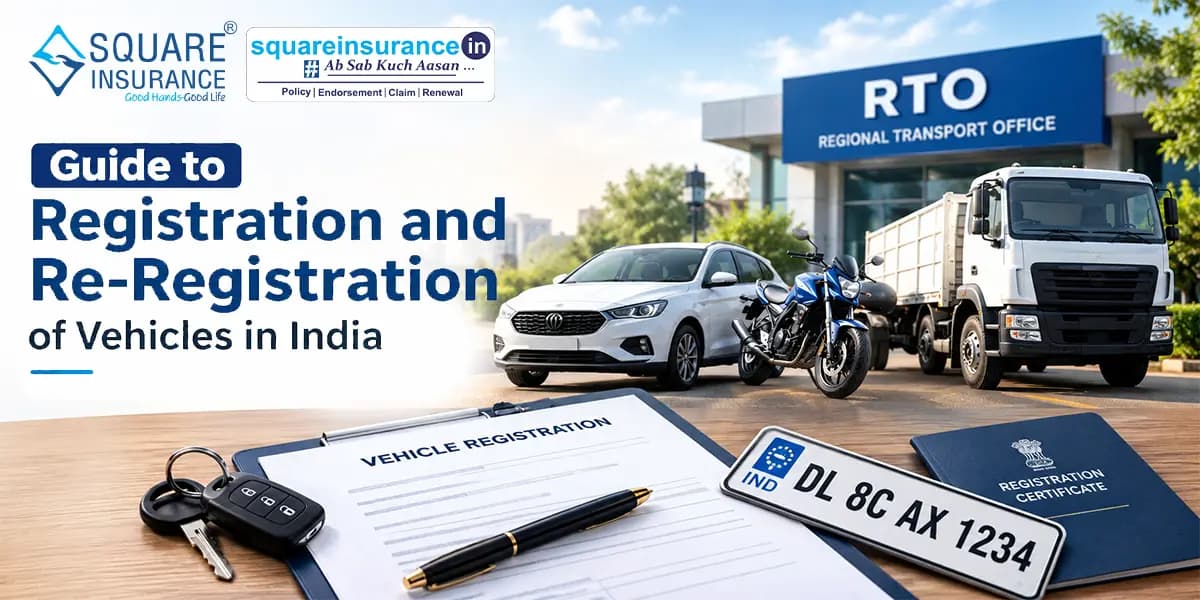
- Vehicle registration is mandatory before you can legally drive a new vehicle on public roads. A new vehicle generally gets temporary registration before permanent registration.
- Form 20 is used for permanent registration of a new vehicle.
- Private vehicles generally need RC renewal after 15 years.
- Moving a vehicle to another state can involve NOC, road tax, and re-registration requirements.
- Valid motor insurance is required as part of the registration process.
India's vehicle market is growing, and the number of vehicles being registered is increasing every year. In FY 2026, 47.05 lakh (4.7 million) passenger vehicles were registered, up 13% from the previous year, according to Vahan Dashboard data compiled by FADA.
Vehicle registration is an important part of owning a vehicle in India. A new vehicle must be registered before it can be driven on public roads. Private vehicles also need RC renewal after 15 years in general. The process involves submitting documents, paying the required fees and taxes, and completing an RTO inspection. This guide covers the key steps, documents and timelines involved.
What Is Vehicle Registration in India?
Vehicle registration is the official process of recording a vehicle with the concerned transport authority. Once the process is completed, the vehicle receives a registration number along with its Registration Certificate (RC).
The RC contains important vehicle registration details, including information about the vehicle and its registered owner.
A new vehicle needs to be registered before it can be legally driven on public roads.
Temporary vs Permanent Vehicle Registration
When you buy a new vehicle, the dealer generally arranges temporary registration while the permanent registration process is completed.
Temporary Registration
Temporary registration allows you to use the new vehicle for a limited period.
It is generally valid for one month. The owner should complete permanent registration before the temporary registration expires.
Permanent Registration
Permanent registration is completed through the concerned RTO.
The process generally involves:
- Submitting the registration application
- Providing the required documents
- Physical inspection of the vehicle
- Paying registration fees and applicable road tax
- Verification of vehicle and owner details
After approval, the vehicle gets its permanent registration number and RC.
How to Register a New Vehicle?
The process can be completed in the following steps:
- 1.Buy the vehicle from the dealer.
- 2.Collect the required documents provided by the dealer.
- 3.Submit Form 20 for permanent registration.
- 4.Provide insurance, address proof, PAN, and other applicable documents.
- 5.Take the vehicle to the RTO for inspection.
- 6.Pay the registration fee and applicable road tax.
- 7.Allow the RTO to verify the vehicle and documents.
- 8.Complete the registration formalities in the relevant system.
- 9.Receive the permanent registration and RC.
The application can also be initiated online through the Parivahan Sewa portal . Physical verification at the RTO is required where applicable.
Documents Required for New Vehicle Registration
The documents normally required include:
| Document | Purpose |
|---|---|
| Form 20 | Application for permanent registration |
| Form 21 | Sale Certificate from the dealer |
| Form 22 | Roadworthiness Certificate |
| Valid vehicle insurance | Proof of insurance |
| Address proof | Confirms the owner's address |
| PAN card/Form 60 or 61 | As applicable |
| Temporary registration | Details of temporary registration |
| Form 34 | Applicable for financed vehicles |
| Fee and tax documents | Proof of applicable payments |
The exact requirements can differ based on the vehicle and the applicable RTO rules.
Why Does the RTO Inspect the Vehicle?
The RTO inspection helps verify that the vehicle matches the information submitted in the registration application.
The inspecting authority can check details such as the chassis number and other vehicle particulars.
This step helps ensure that the registration record belongs to the actual vehicle being presented for registration.
What Is Vehicle Re-Registration or RC Renewal?
Vehicle re-registration refers to registering a vehicle again when required under applicable rules.
For private vehicles, RC renewal generally becomes necessary after 15 years. The renewal process checks whether the vehicle continues to meet the required fitness and registration conditions.
It is different from registering a new vehicle for the first time.
For an older vehicle, the owner needs to submit the required documents, present the vehicle for inspection, and pay the applicable renewal fee.
Documents Required for RC Renewal After 15 Years
Keep these documents ready for the renewal process:
- Form 25
- Original RC
- Valid motor insurance
- PUC certificate
- Proof of road-tax payment
- Fitness certificate
- PAN or owner identification documents
- Chassis and engine number details
- Applicable renewal fee
The exact requirements can depend on the vehicle and applicable rules.
How to Renew Your Vehicle RC?
The process can be broadly understood as:
Apply Submit documents Vehicle inspection Fitness verification Pay fees Document verification RC renewal
- 1.Apply for RC renewal through the Parivahan Sewa portal or at the local RTO.
- 2.Collect and submit the required documents.
- 3.Pay the applicable renewal and inspection fees.
- 4.Take the vehicle to the RTO for physical inspection.
- 5.Allow the RTO to check the vehicle's fitness and documents.
- 6.Complete the required verification and formalities. The renewed smart-card RC is typically issued within 7 to 15 working days.
- 7.Receive the renewed RC after approval.
When Do You Need Vehicle Re-Registration After Moving to Another State?
Moving your vehicle to another state involves more than changing your address.
If you keep the vehicle in the new state beyond the permitted period, you need to check the requirements for vehicle re-registration.
The process can involve:
- Obtaining a No Objection Certificate (NOC)
- Paying road tax in the new state
- Completing new-state registration
- Updating the address
- Addressing vehicle loan or hypothecation requirements
Which Forms Are Used for Interstate Transfer?
- Forms 27 and 28 are relevant to interstate re-registration and the NOC process.
- Form 33 can be used where an address change is required.
- If the vehicle is still under a loan, an NOC from the financier can also be required before completing the process.
What Happens to Road Tax After Interstate Re-Registration?
Road tax in the new state is calculated according to that state's applicable rules.
The amount can depend on factors such as the vehicle type and other vehicle details.
After completing registration in the new state, you can apply for a road-tax refund from the previous state, where applicable.
The refund process depends on the rules followed by the concerned state.
Vehicle Registration and Motor Insurance
Motor insurance is an important part of the registration process.
Valid third-party motor insurance is mandatory for vehicles being driven on public roads. It covers specified legal liabilities towards third parties, subject to applicable terms.
A comprehensive motor insurance policy combines third-party liability protection with own-damage cover for the insured vehicle, subject to the policy conditions.
Therefore, check your insurance validity when registering a new vehicle, renewing an RC or transferring a vehicle to another state.
How to Check Vehicle Registration Details?
Your vehicle registration details are recorded in the government vehicle database after registration.
These details can be useful when you:
- Renew your RC
- Renew your insurance
- Sell your vehicle
- Transfer the vehicle to another state
- Check ownership or registration information
Keep your RC and other vehicle documents safely accessible.
How to Check Vehicle Registration Status?
After submitting a registration application, you can check the vehicle registration status through the applicable online transport services.
You typically need the relevant vehicle or application details to access the status.
Checking the status is useful when your registration is still being processed, and you want to know whether it has been completed.
Vehicle Registration vs Re-Registration: What Should Vehicle Owners Keep in Mind?
Before starting the registration or renewal process:
- Keep the original documents ready.
- Check that your motor insurance is valid.
- Complete permanent registration before temporary registration expires.
- Keep chassis and engine details available.
- Attend the RTO inspection when required.
- Pay applicable registration fees and road tax.
- Keep your renewed RC safely.
- Check your vehicle registration status if the application is pending.
- Follow the required process when moving a vehicle to another state.
Conclusion
Vehicle registration is an essential part of owning a vehicle in India. A new vehicle needs permanent registration after its temporary registration period, while older private vehicles generally need RC renewal after 15 years.
Vehicle owners also need to understand the process when moving a vehicle to another state. NOC, road tax, address changes and loan-related requirements can all become relevant.
Keeping your vehicle registration details, insurance and RC updated helps you stay compliant and avoids problems when you need to sell, transfer or renew your vehicle.
FAQs
Yes, a vehicle needs valid registration before it can be legally driven on public roads.
Temporary registration is generally valid for one month. Complete permanent registration before it expires.
Form 20 is used to apply for permanent registration of a new vehicle.
Common documents include Form 20, Form 21, Form 22, valid insurance, address proof, PAN or applicable alternatives, temporary registration and payment documents.
A private vehicle generally requires RC renewal after 15 years, subject to applicable rules and fitness requirements.
Form 25 is used for applying for renewal of the Registration Certificate.
Yes, the vehicle needs to undergo inspection and fitness verification as part of the renewal process.
If the vehicle remains in another state beyond the permitted period, re-registration requirements can apply. NOC, road tax, and other documentation can also be required.
An NOC can be required when transferring a vehicle to another state. The applicable requirements also depend on factors such as the vehicle's registration and loan status.
Yes, valid motor insurance is among the documents required for vehicle registration. Third-party motor insurance is also mandatory for vehicles driven on public roads.
 2094*
2094*By clicking on You, Agreed to our Privacy Policy & Terms of use *Disclaimer
- 5.5 CrRegistered Consumers
- 50+Insurance Partners
- 3.4 CrPolicies Sold


