
 2094*
2094*By clicking on You, Agreed to our Privacy Policy & Terms of use *Disclaimer
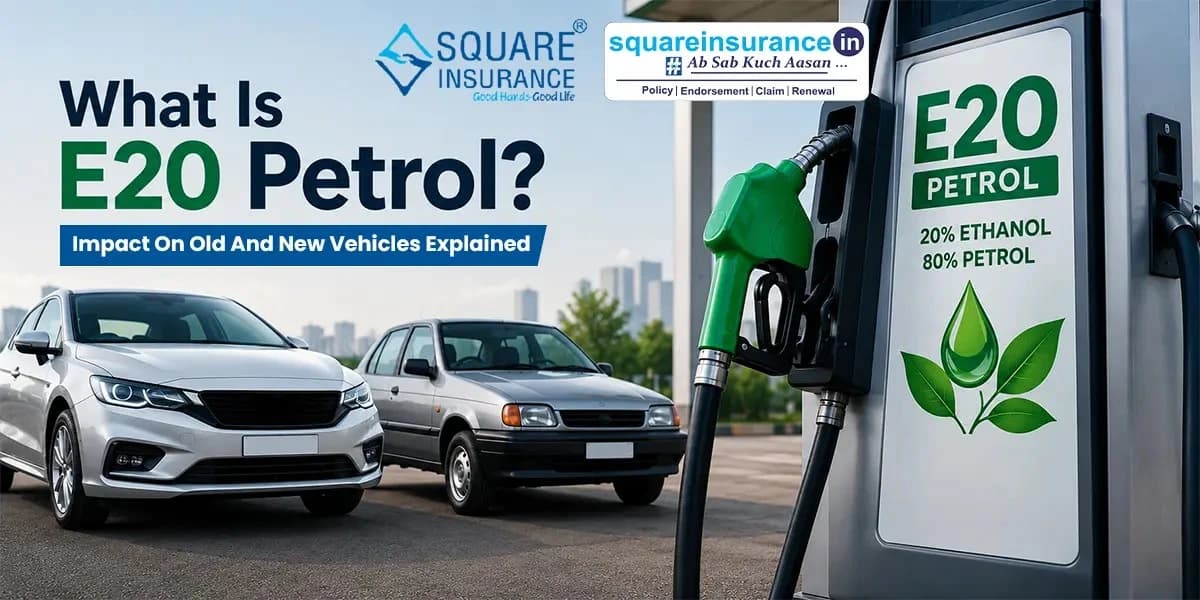
You must have heard about the buzz created around E85 fuel in July 2026. With its launch in Delhi at a lower price than petrol, many vehicle owners have started discussing ethanol-blended fuels and wondering whether their vehicles can run on them.
However, before understanding E85, it is important to know about E20 petrol, which has already become the standard fuel available at petrol pumps across India.
This guide explains what E20 petrol is, how it affects old and new vehicles, and how to check if your vehicle is E20-compatible.
What Is E20 Petrol?
E20 petrol is a fuel made by blending 20% ethanol with 80% petrol. Ethanol is a renewable, plant-based fuel produced from crops such as sugarcane and maize.
The Government of India introduced E20 petrol to reduce vehicle emissions, lower crude oil imports, and promote cleaner transportation. It is now the standard petrol supplied at fuel stations across the country.
E20 Fuel vs Normal Petrol
The main difference between E20 fuel and normal petrol is the amount of ethanol mixed with the fuel.
- Normal petrol (E10) contains up to 10% ethanol and 90% petrol.
- E20 petrol contains 20% ethanol and 80% petrol.
| Feature | Normal Petrol (E10) | E20 Petrol |
|---|---|---|
| Ethanol Content | Up to 10% | 20% |
| Fuel Source | Mostly fossil fuel | Petrol + renewable ethanol |
| Pollution | Higher emissions | Lower CO and HC emissions |
| Environmental Impact | Higher carbon footprint | Lower carbon footprint |
| Crude Oil Dependence | Higher | Lower |
| Supports Agriculture | Limited | Higher demand for ethanol-producing crops |
Why India Introduced E20 Petrol?
India introduced E20 petrol to reduce crude oil imports, lower vehicle emissions, and support farmers by increasing ethanol production from crops like sugarcane and maize. It also helps improve the country's energy security.
Timeline
| Year/Date | Development |
|---|---|
| 2003 | India launched the Ethanol Blended Petrol (EBP) Programme with 5% ethanol blending (E5). |
| 2021 | The government advanced the target to achieve 20% ethanol blending (E20) by 2025-26. |
| 6 February 2023 | E20 petrol was launched at selected fuel stations across India. |
| 1 April 2025 | Fuel stations across the country started supplying E20 petrol in a phased manner. |
| 1 April 2026 | E20 petrol became the standard petrol supplied at fuel stations across India. |
Why Does E20 Affect Old and New Vehicles Differently?
E20 petrol affects old and new vehicles differently because their engines and fuel systems are designed differently.
New vehicles, especially those manufactured after the introduction of E20 standards, are built with ethanol-resistant fuel system components and engines calibrated for E20 petrol. As a result, they can use E20 fuel without any major impact on performance or reliability.
Older vehicles were designed for lower ethanol blends, such as E0 or E10. Their fuel pipes, rubber seals, gaskets, and engine settings are not optimized for E20. Regular use of E20 in such vehicles can reduce fuel efficiency, affect engine performance, and increase wear on fuel system components over time.
Impact of E20 Petrol on Older Vehicles
Older vehicles are not always designed to run on E20 petrol. Regular use of E20 in incompatible vehicles can lead to:
- Slightly lower fuel efficiency
- Reduced engine performance
- Wear and tear of fuel pipes, rubber seals, and gaskets
- Higher maintenance costs over time
Note: If your vehicle was manufactured before the E20 mandate, check the owner's manual or confirm with the manufacturer before using E20 petrol.
Impact of E20 Petrol on New Vehicles
The impact of E20 petrol on new vehicles that are E20-compatible is as follows:
- Normal engine performance
- Minimal impact on fuel efficiency
- Better combustion with lower emissions
- No damage to the fuel system when used as recommended
Which Vehicles Are Most Likely to be Compatible?
The following vehicles are generally E20-compatible:
- Most vehicles manufactured after the E20 rollout, as they are designed for a 20% ethanol blend.
- Vehicles labelled as E20-compatible by the manufacturer.
- New-generation cars, motorcycles, and SUVs launched with E20-ready engines.
How to Check if Your Vehicle Is E20-Compatible?
You can check whether your vehicle supports E20 petrol in the following ways:
- Read the owner's manual to see the recommended fuel type.
- Visit the manufacturer's website and check your vehicle's specifications.
- Contact an authorised dealership or service centre for confirmation.
- Check the manufacturing year. Most vehicles manufactured after the E20 rollout are E20-compatible, but compatibility can vary by model and variant.
- Look for an E20-compatible label on the fuel lid or in the owner's manual, if provided by the manufacturer.
Signs Your Vehicle Is Not Compatible with E20
If your vehicle is not E20-compatible, you will notice the following signs:
- Lower fuel efficiency
- Reduced engine performance
- Engine knocking or rough idling
- Difficulty starting the vehicle
- Damage to fuel pipes, rubber seals, or gaskets over time
Can Older Vehicles Be Upgraded for E20 Suitability?
Yes, some older vehicles can be upgraded to support E20 petrol, but it depends on the manufacturer and the vehicle model. In some cases, manufacturers can recommend replacing certain fuel system components or updating the engine calibration.
Not all older vehicles can be upgraded, so always check with the manufacturer before making any modifications.
Should You Continue Using E20 Petrol?
E20 petrol in India is available at every petrol pump by default. So, it is always advisable to get a compatible vehicle that runs efficiently on E20 without harming any vehicle part or the engine. If your vehicle is not E20-compatible, avoid using E20 petrol regularly unless the manufacturer recommends it.
So, always use the fuel recommended by your vehicle manufacturer to ensure better performance and a longer engine life.
Some key initiatives include:
- Nationwide E20 Rollout: Since April 2025, all petrol pumps in India have been supplying E20 petrol (20% ethanol and 80% petrol).
- Expansion of Ethanol Production: The government has increased ethanol production by encouraging its manufacture from sugarcane, maize, surplus food grains, and agricultural waste to meet the growing demand for E20 fuel.
- Fuel Infrastructure Upgrade: Oil Marketing Companies (OMCs) have upgraded fuel storage and dispensing systems at petrol pumps to support the nationwide supply of E20 petrol.
- Supportive Policies: The government has introduced measures such as reduced GST on fuel-grade ethanol and assured procurement prices to encourage ethanol production and blending.
Conclusion
To conclude, E20 petrol is a cleaner and more sustainable fuel that is now available across India. While most new E20-compatible vehicles can use it without any major issues, older vehicles should only use E20 if the manufacturer recommends it.
Before switching to E20 petrol, check your vehicle's compatibility through the owner's manual or an authorised service centre. Using the right fuel will help maintain your vehicle's performance, improve engine life, and avoid unnecessary repair costs.
FAQs
E20 petrol is a fuel that contains 20% ethanol and 80% petrol. It helps reduce vehicle emissions and lowers India's dependence on imported crude oil.
The main difference between E20 petrol and normal petrol is the amount of ethanol they contain. E20 petrol has 20% ethanol, while normal petrol (E10) has up to 10% ethanol. E20 is a cleaner fuel, but it should only be used in E20-compatible vehicles.
You should use it only if your vehicle manufacturer has confirmed that your vehicle is compatible with it.
It can slightly reduce mileage because ethanol contains less energy than petrol. The impact is usually small in compatible vehicles.
You can check your owner's manual, visit the manufacturer's website, or contact an authorised service centre.
 2094*
2094*By clicking on You, Agreed to our Privacy Policy & Terms of use *Disclaimer
- 5.5 CrRegistered Consumers
- 50+Insurance Partners
- 3.4 CrPolicies Sold


