
 30/ Day*
By clicking on You, Agreed to our Privacy Policy & Terms of use *Disclaimer
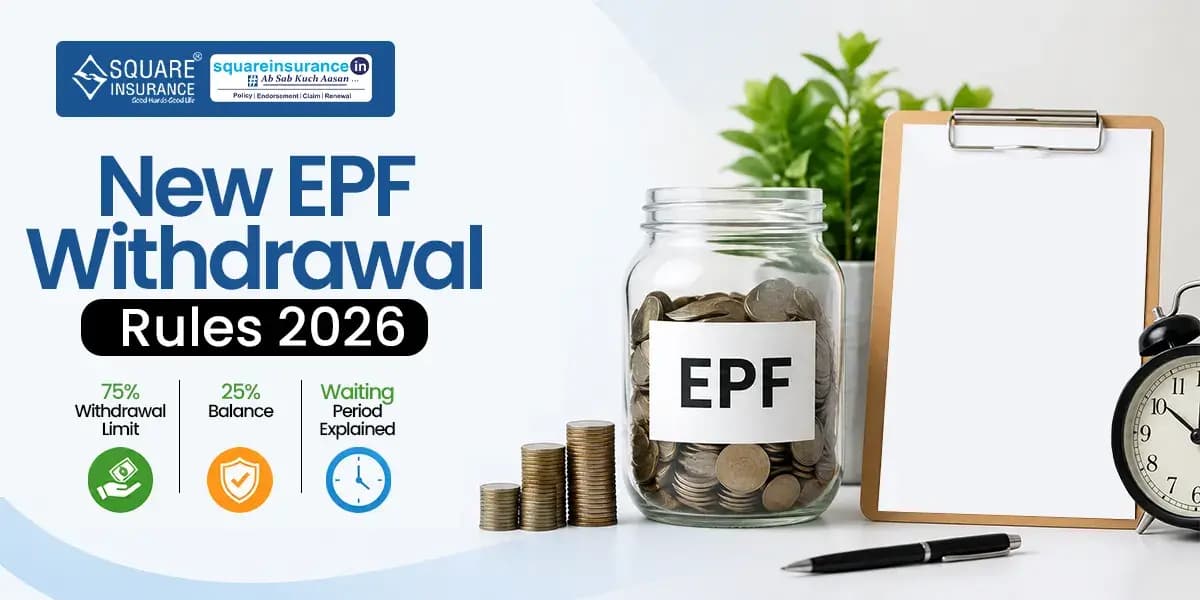
- EPFO has simplified partial EPF withdrawals into three categories: Essential Needs, Housing Needs and Special Circumstances.
- Members can access up to 75% of their eligible EPF balance, subject to applicable conditions.
- 25% of the balance is retained in the EPF account.
- Several partial-withdrawal provisions now have a 12-month minimum EPF membership requirement.
- Premature final EPF settlement now has a 12-month waiting period (earlier it was 2 months).
- EPS withdrawal benefits have a separate 36-month waiting period.
EPFO Changes EPF Withdrawal Rules in 2026
Under the revised framework, eligible members can access up to 75% of their EPF balance for applicable needs, while the remaining 25% stays in the account.
The government explained the revised provisions in the Lok Sabha on August 10, 2026, following questions about the new EPF withdrawal conditions and waiting periods.
While partial withdrawals have been made more flexible, the rules also introduce waiting periods for premature final EPF settlement and withdrawal benefits under the Employees' Pension Scheme (EPS).
- Partial withdrawal: You can withdraw only part of your EPF funds for eligible needs such as medical treatment, education, or housing. It is done while still being in the job. Partial withdrawal can happen before retirement.
- Final settlement: You withdraw your EPF balance and close your EPF account upon leaving employment.
- Premature final settlement: When an employee leaves a job before retirement and seeks to withdraw their EPF balance in full, subject to the applicable rules and waiting period.
What Are the Three New EPF Withdrawal Categories?
The revised framework brings several partial withdrawal provisions under three broad categories.
1Essential Needs
This category covers important expenses such as:
- Medical treatment
- Education
- Marriage
The revised rules also provide greater flexibility for some of these withdrawals. Medical withdrawals do not carry a fixed limit on the number of times a member can seek an advance, subject to applicable conditions.
Education-related withdrawals can be made up to 10 times during EPF membership, while marriage-related withdrawals can be made up to five times.
2Housing Needs
The Housing Needs category covers certain expenses related to buying, constructing, repairing or improving a house.
It also includes certain requirements linked to housing loans, subject to the applicable EPF conditions.
3Special Circumstances
This category provides greater flexibility for members who need access to their EPF savings.
Members can access up to 75% of their balance under this category without specifying a particular reason, subject to the applicable rules.
Unemployment is also covered under the revised framework. An unemployed member can access up to 75% of the PF balance, while 25% remains in the account.
How Much EPF Can You Withdraw under Partial Withdrawal?
Under the revised framework, members can withdraw up to 75% of their eligible EPF balance, subject to the conditions applicable to the withdrawal.
The remaining 25% is retained in the EPF account.
For example, if a member has an eligible EPF balance of Rs 4 lakh, up to Rs 3 lakh can be accessed under the applicable withdrawal provisions, while Rs 1 lakh remains in the account.
| EPF Balance | Up to 75% Withdrawal | 25% Retained |
|---|---|---|
| Rs 2 lakh | Rs 1.5 lakh | Rs 50,000 |
| Rs 4 lakh | Rs 3 lakh | Rs 1 lakh |
| Rs 6 lakh | Rs 4.5 lakh | Rs 1.5 lakh |
The retention requirement helps ensure that a portion of the member's retirement savings remains in the EPF account.
Why Is 25% of the EPF Balance Retained?
EPF is primarily designed as a long-term retirement savings instrument. Allowing members to withdraw their entire balance whenever they face a financial requirement could reduce the amount available at retirement.
The revised framework therefore allows members to access a substantial portion of their savings while keeping 25% in the account.
However, the 25% retention should not be treated as an absolute restriction on full withdrawal in every situation. The applicable EPF rules continue to determine when final settlement is permitted.
What Is the New 12-Month EPF Membership Requirement?
The revised framework brings several partial-withdrawal provisions under a 12-month minimum EPF membership requirement.
Earlier, different types of advances had different service requirements. The revised approach simplifies these provisions by reducing the minimum membership requirement for several withdrawals to 12 months.
This does not mean every member can automatically withdraw money after completing 12 months. The member must still meet the conditions applicable to the specific withdrawal category.
What Is the New 12-Month Waiting Period for Premature EPF Settlement?
The revised rules introduce a 12-month waiting period for premature final EPF settlement.
This applies to final settlement and should not be confused with partial withdrawal.
In a partial withdrawal, a member accesses part of the EPF balance while retaining the remaining amount in the account. Final settlement is different because it involves withdrawal of the EPF balance after leaving employment, subject to the applicable rules.
Therefore, the 12-month waiting period for final settlement does not mean that members have to wait 12 months for every type of EPF withdrawal.
What Is the 36-Month EPS Waiting Period?
A separate 36-month waiting period applies to withdrawal benefits under the Employees' Pension Scheme (EPS), subject to applicable conditions.
This is different from the 12-month waiting period for premature final EPF settlement.
| Type of Withdrawal | Applicable Provision |
|---|---|
| Partial EPF withdrawal | 12-month minimum membership for several provisions |
| Premature final EPF settlement | 12-month waiting period |
| EPS withdrawal benefits | 36-month waiting period |
Members should therefore distinguish between their EPF balance and EPS withdrawal benefits when checking the applicable waiting period.
What Has Changed for Medical, Education and Marriage Withdrawals?
The revised framework provides greater flexibility for essential expenses.
Medical: Members can make medical-related withdrawals with greater flexibility and without a fixed limit on the number of withdrawals, subject to applicable rules.
Education: Education-related withdrawals can be made up to 10 times during EPF membership.
Marriage: Marriage-related withdrawals can be made up to five times during EPF membership.
These provisions are intended to make EPF advances more accessible for major financial requirements.
Bottom Line
The EPF Scheme 2026 changes make partial withdrawals simpler and provide members with greater access to their savings for essential, housing, and special needs. However, the revised framework does not mean that 75% of the EPF balance can be withdrawn without conditions.
Members need to check which withdrawal category applies to them and meet the relevant eligibility requirements. The overall approach is to provide financial support when members need it while retaining a portion of their EPF savings for their long-term retirement needs.
FAQs
Eligible members can withdraw up to 75% of their EPF balance under the applicable partial-withdrawal rules. The remaining 25% is retained in the EPF account.
Partial EPF withdrawals are now grouped into three categories:
- Essential Needs
- Housing Needs
- Special Circumstances
Essential Needs include expenses such as medical treatment, education, and marriage.
The minimum service requirement for several partial-withdrawal provisions is now 12 months, subject to the applicable rules.
Education-related EPF withdrawals can be made up to 10 times during EPF membership, subject to the applicable conditions.
 2094*
2094*By clicking on You, Agreed to our Privacy Policy & Terms of use *Disclaimer
- 5.5 CrRegistered Consumers
- 50+Insurance Partners
- 3.4 CrPolicies Sold


