
 2094*
2094*By clicking on You, Agreed to our Privacy Policy & Terms of use *Disclaimer
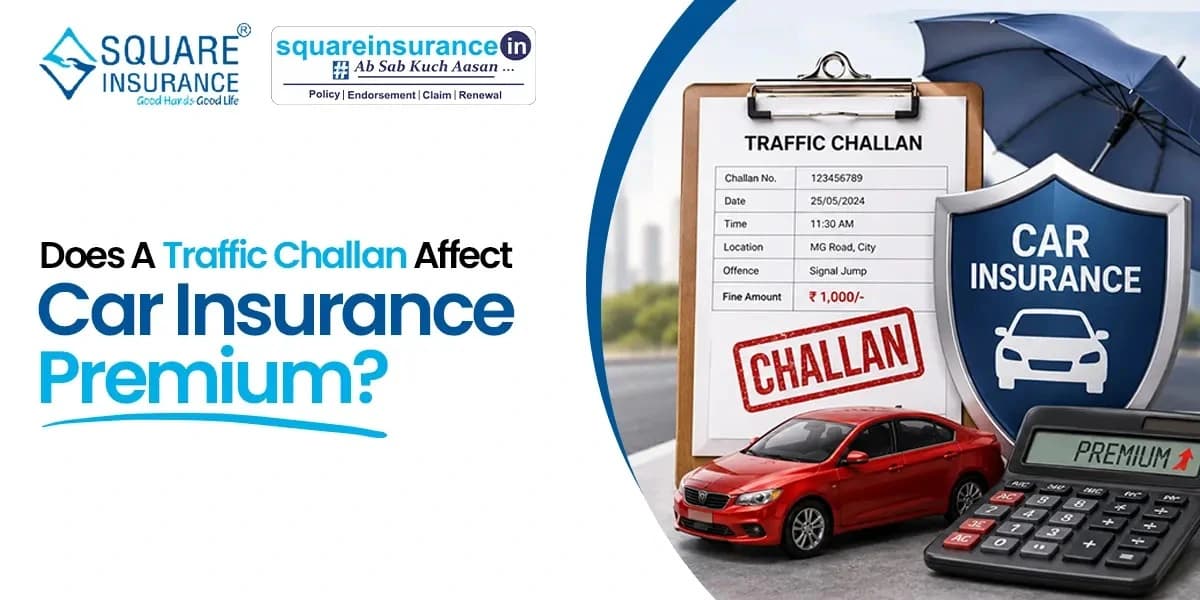
Yes, a traffic challan affects car insurance premiums. But a single challan does not directly increase your premium, but indicates the risk involved with your car to the insurer.
Repeated traffic violations can indicate risky driving behaviour, which also influences the risk your insurers consider. While a single challan will not always impact your premium, multiple offences can.
You Paid the Fine. Is the Matter Really Over?
Not always!
Paying a traffic challan clears the fine, but the record remains. A single minor challan is usually not a major concern. However, repeated traffic offences show a pattern of risky driving that the insurer considers risky. This is why it is important to maintain a clean driving record even after paying a challan.
However, frequent traffic violations can indicate risky driving habits. If such behaviour leads to accidents, claims, or a poor driving record, it may indirectly influence how insurers assess risk during policy renewal.
How Traffic Challan Affect Car Insurance Premium?
Insurance companies use various factors to assess risk, and traffic violations can be one of them. Frequent challans indicate unsafe driving habits and a higher chance of accidents.
As a result, drivers with multiple traffic offences are considered riskier than those with a clean driving record. Traffic challans and insurance premiums are not directly connected in most cases. However, violations can form part of a driver's overall risk profile.
Not All Challans Are Treated the Same
The effect of a traffic challan depends on the type of traffic rule broken. Minor violations, such as parking in the wrong place or not carrying required documents, are usually less serious.
However, offences like drunk driving, signal jumping, or repeated overspeeding are considered more serious. Insurers view frequent or severe violations as a sign of risky driving behaviour.
| Traffic Offence | If It Happens Once | If It Happens Repeatedly |
|---|---|---|
| Parking Violation | Usually has little impact. | May indicate disregard for traffic rules. |
| Not Carrying Documents | Generally treated as a minor lapse. | May reflect poor compliance with regulations. |
| Not Wearing a Seat Belt | Seen as a minor safety violation. | May suggest unsafe driving habits. |
| Overspeeding | Often viewed as an isolated incident. | Can indicate a higher risk of accidents. |
| Signal Jumping | Considered a serious traffic offence. | May be viewed as reckless driving behaviour. |
| Using a Mobile Phone While Driving | Usually treated as a one-time mistake. | Can suggest distracted driving. |
| Wrong-Side Driving | Considered a high-risk violation. | May indicate unsafe road behaviour. |
| Drunk Driving | Viewed as a very serious offence. | Strongly associated with high driving risk. |
| Dangerous Driving | Considered a major safety concern. | Can establish a pattern of risky driving. |
| Driving Without Insurance | Reflects non-compliance with legal requirements. | May indicate repeated disregard for road laws. |
Factors that Impact the Effect of Traffic Challan on Car Insurance Premium
The impact of a traffic challan on your car insurance premium can depend on several factors:
- Type of violation: Serious offences like drunk driving or dangerous driving are usually viewed more seriously than minor violations.
- Number of challans: One challan may not have much impact, but repeated violations can show risky driving behaviour.
- Driving history: Drivers with a clean record are generally viewed more favourably than those with frequent traffic offences.
- Claim history: If traffic violations lead to accidents and insurance claims, it may affect future premiums.
- Insurance company policies: Different insurers may assess traffic violations in different ways while calculating premiums.
A No Claim Bonus is based on claim-free driving during the policy period. Receiving a traffic challan alone does not reduce your NCB.
However, if a traffic violation leads to an accident and you file a claim for vehicle damage, your NCB may be reduced or lost according to the policy terms.
How to Avoid Traffic Challans
Most traffic challans can be avoided by paying attention to a few basic rules. A little care on the road can save you from fines, stress, and unnecessary trouble.
- Track Speed: Speed cameras are common, and even a few extra kilometres per hour can result in a challan.
- Get Updated Documents: Make sure your driving licence, RC, insurance, and PUC certificate are valid and up to date.
- Follow Traffic Lights: Jumping a red light is one of the most common reasons people receive challans.
- Wear your seat belt every time: It takes only a few seconds and helps you avoid both fines and injuries.
- Don't Use Phone: A quick call or message can distract you and lead to a traffic violation.
- Drive in the correct lane: Wrong-side driving and unsafe lane changes can attract heavy penalties.
- Never Drink and Drive: This is a serious offence that can lead to large fines, licence suspension, or even legal action.
- Check Challan Status: Sometimes e-challans are issued automatically through traffic cameras, so it is good to stay informed.
Should You Be Worried About a Single Traffic Challan?
It is every driver's responsibility to drive safely on the road without harming the people around and following the rules. So, following traffic rules is not only legally mandatory but also makes roads safer.
A one-time challan for a minor violation is usually seen as an isolated incident. What matters more is whether traffic offences become a habit. Repeated violations such as overspeeding, signal jumping, or drunk driving can indicate risky driving behaviour
Instead of worrying about a single challan, focus on following traffic rules and maintaining a clean driving record.
Can Traffic Violations Lead to Insurance Claim Rejection?
Traffic violations do not automatically lead to claim rejection. But if the accident happened due to the influence of alcohol, without a valid driving licence, or in violation of policy terms, the insurer simply rejects the claim. So, it is important to follow traffic rules and ensure that all vehicle documents remain valid.
Conclusion
To conclude, one challan is never the problem, but negligence and frequent rule violations are! A single mistake is usually not a cause for concern, but repeated offences can indicate unsafe driving habits.
Following traffic rules, maintaining a clean driving record, and driving responsibly help in many ways. It diminishes penalties, reduces accident risks, and builds a positive profile as a driver. Safe driving benefits not only you but everyone on the road.
FAQs
No, a traffic challan does not usually increase your car insurance premium immediately. However, repeated or serious traffic violations indicate risky driving behaviour.
A single minor challan has little impact. However, if traffic violations occur frequently or lead to accidents and insurance claims, insurers view the driver as a higher risk. This can influence how the premium is evaluated based on the risk involved.
Yes, repeated traffic violations can indicate risky driving behaviour. Insurers may consider a driver's overall risk profile during policy renewal, especially if violations are frequent or lead to insurance claims.
No, a traffic challan by itself does not reduce your No Claim Bonus. NCB is affected when you make a claim under your car insurance policy, not simply because you receive a challan.
Offences such as drunk driving, dangerous driving, signal jumping, and repeated overspeeding are generally considered more serious than minor violations like parking offences or not carrying documents. These violations can indicate a higher level of driving risk.
 2094*
2094*By clicking on You, Agreed to our Privacy Policy & Terms of use *Disclaimer
- 5.5 CrRegistered Consumers
- 50+Insurance Partners
- 3.4 CrPolicies Sold


