
 2094*
2094*By clicking on You, Agreed to our Privacy Policy & Terms of use *Disclaimer
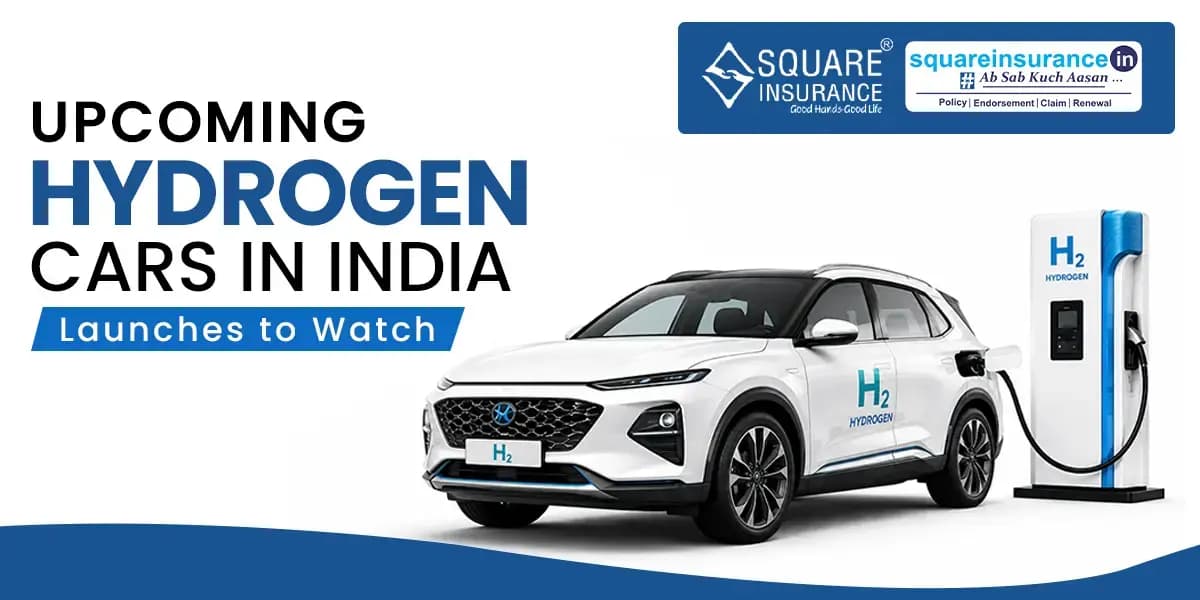
- Hydrogen passenger cars are not available for mainstream retail buyers in India in 2026.
- No confirmed consumer hydrogen car launch has been announced for 2026.
- Toyota Mirai, Hyundai NEXO and MG Euniq 7 are worth watching as prospects.
- Limited hydrogen refuelling infrastructure remains a major challenge.
- India is currently focusing more on hydrogen pilots, commercial transport and infrastructure.
- EVs remain far more accessible to Indian consumers.
Hydrogen cars are often presented as the next big step in clean mobility. Several manufacturers already sell fuel-cell vehicles in international markets. However, the situation is different in India.
In 2026, hydrogen cars in India are still at an early stage, with testing, demonstrations and pilot projects taking priority over retail sales. So, while models such as the Toyota Mirai and Hyundai NEXO are worth watching, buyers should not mistake them for confirmed 2026 launches.
Are Hydrogen Cars Coming to India in 2026?
There are currently no confirmed mainstream hydrogen passenger-car launches for Indian consumers in 2026.
Hydrogen mobility in India is still developing. Government programmes include mobility pilot projects under the National Green Hydrogen Mission. The focus is also on hydrogen production, distribution, storage and commercial applications.
The biggest challenge is infrastructure.
A passenger car needs convenient access to hydrogen refuelling stations. India does not yet have a widespread public network for hydrogen cell vehicles comparable with the charging infrastructure available for electric vehicles.
This is why the term "upcoming hydrogen cars" needs some context. The models discussed below are better viewed as hydrogen cars to watch, rather than confirmed Indian launches.
Upcoming Hydrogen Cars in India to Watch
1Toyota Mirai
The Toyota Mirai is one of the best-known hydrogen fuel-cell electric vehicles globally. Key details:
| Feature | Toyota Mirai |
|---|---|
| Manufacturer | Toyota |
| Body type | Sedan |
| Powertrain | Hydrogen fuel-cell electric |
| India status | Pilot/testing |
| Retail launch in 2026 | Not confirmed |
| Range | Varies by generation and test cycle |
Toyota has already used the Mirai in Indian hydrogen mobility trials. In December 2025, Toyota Kirloskar Motor handed a second-generation Mirai to the National Institute of Solar Energy for real-world testing under Indian conditions.
Its highlights include:
- Hydrogen fuel-cell powertrain
- Up to 850 km range under Toyota's specified test method
- Digital display technology
- Connected vehicle functions
- Driver-assistance systems
- No confirmed 2026 Indian retail launch
- No confirmed Indian price
2Hyundai NEXO
The Hyundai NEXO is another important hydrogen vehicle to watch. It is a fuel-cell SUV designed for markets where hydrogen refuelling infrastructure is available.
The all-new NEXO delivers a 190 kW total system output. Hyundai projects a range of up to 826 km under the WLTP test cycle for the European model. The company also says hydrogen refuelling can take around five minutes.
Its highlights include:
- Hydrogen fuel-cell powertrain
- SUV body style
- Advanced driver assistance systems
- Smart parking functions
- Connected cabin technology
- Five-minute hydrogen refuelling claim
These are global specifications. They should not be treated as confirmed Indian specifications.
There is also no confirmed 2026 retail launch date for the NEXO in India.
3MG Euniq 7
The MG Euniq 7 is a hydrogen fuel-cell MPV that has already been showcased in India.
MG displayed the model at Auto Expo 2023 as a demonstration of its hydrogen technology.
Its highlights include:
- Claimed range of up to 605 km
- Peak output of around 201 hp
- Seven-seat layout
- Sliding rear doors
- Panoramic sunroof
- Digital displays
However, MG did not announce an Indian launch for the Euniq 7. The model was presented as a technology demonstrator rather than a confirmed retail product.
So, it remains a model to watch rather than an upcoming 2026 launch.
Hydrogen Cars to Watch: Quick Comparison
| Model | Type | India status in 2026 | Claimed/global range | Launch status |
|---|---|---|---|---|
| Toyota Mirai | Sedan | Pilot/testing | Varies by generation | Not confirmed |
| Hyundai NEXO | SUV | Prospected | Up to 826 km WLTP* | Not confirmed |
| MG Euniq 7 | MPV | Showcased | Around 605 km* | Not confirmed |
*Range figures depend on the model, market and test cycle. They should not be treated as confirmed Indian specifications.
Why Are Hydrogen Cars Not Launching in India Yet?
The technology itself is not the only challenge. The supporting ecosystem needs to develop as well.
Limited Refuelling Infrastructure
This is the biggest hurdle for passenger cars.
An EV owner can use home charging, workplace chargers or public charging stations. Hydrogen car owners need access to specialised hydrogen refuelling stations.
High Infrastructure Costs
Hydrogen needs to be produced, stored, transported and distributed safely. Setting up this network requires significant investment.
The National Green Hydrogen Mission includes support for hydrogen production, supply chains, storage and mobility pilot projects. However, building this ecosystem takes time.
Higher Vehicle Costs
Fuel-cell vehicles use specialised components such as fuel-cell stacks and high-pressure hydrogen tanks. These technologies remain expensive compared with mainstream battery-electric vehicles.
Passenger-Car Demand Is Still Limited
India's passenger vehicle market currently offers consumers a much wider choice of battery-electric cars and hybrids. Hydrogen vehicles have more potential in areas where longer range, quick refuelling and high vehicle utilisation justify the infrastructure investment.
This is one reason hydrogen mobility programmes also focus on commercial transport.
How Do Hydrogen Fuel-Cell Cars Work?
A hydrogen fuel-cell car is still an electric vehicle. The difference is how it produces electricity. The process is fairly simple:
- 1.Hydrogen is stored in high-pressure tanks.
- 2.It enters the fuel-cell system.
- 3.Then reacts with oxygen from the air.
- 4.The reaction generates electricity.
- 5.The electricity powers an electric motor.
- 6.Water is the main vehicle-level exhaust by-product.
Unlike a battery EV, a fuel-cell vehicle generates electricity onboard rather than relying mainly on a large traction battery.
Hydrogen Cars vs EVs in India
| Factor | Hydrogen FCEV | Battery EV |
|---|---|---|
| Energy source | Hydrogen | Electricity |
| Energy replenishment | Hydrogen refuelling | Charging |
| Vehicle-level tailpipe output | Water | No tailpipe emissions |
| Indian infrastructure | Very limited | More developed |
| Consumer availability | No mainstream options | Multiple models |
| Replenishment time | Generally short | Depends on charger and battery |
| Indian market stage | Pilot/early stage | Commercial |
For an Indian buyer today, an EV is the more practical option because models, charging networks and ownership support are already available at a much larger scale.
What Is India Doing to Promote Hydrogen Mobility?
India is not ignoring hydrogen. The government has created the National Green Hydrogen Mission to develop production, use and related infrastructure.
The mission includes mobility pilot projects along with work on hydrogen production, storage, transportation, distribution and research.
Developing hydrogen production does not automatically mean hydrogen passenger cars are ready for mass-market sales. A complete ecosystem needs to develop around the vehicle.
That includes:
- Hydrogen production
- Storage facilities
- Transportation networks
- Refuelling stations
- Safety standards
- Vehicle technology
- Consumer support
Will Hydrogen Cars Launch in India in 2026?
No confirmed mainstream hydrogen passenger-car launch has been announced for the Indian consumer market in 2026.
Toyota Mirai, Hyundai NEXO and MG Euniq 7 are useful models to watch. Their technology shows what hydrogen-powered passenger vehicles can offer. However, their presence in testing or international markets does not confirm an Indian retail launch anytime soon.
Conclusion
Hydrogen cars have a place in India's future mobility plans, but 2026 is still largely a development and pilot phase for passenger FCEVs (Fuel Cell Electric Vehicles).
The Toyota Mirai, Hyundai NEXO and MG Euniq 7 show how the technology is progressing. Yet Indian buyers cannot currently treat these models as confirmed mainstream 2026 launches.
For now, the biggest barrier is not the absence of hydrogen-powered cars. It is the lack of a mature ecosystem to support them.
As India expands its hydrogen production and mobility projects, passenger cars could eventually become part of the market. Until then, EVs remain the more accessible clean-mobility choice for Indian consumers.
FAQs
Hydrogen cars are being tested in India through pilot projects, but they are not yet widely available for private buyers.
Hydrogen cars use a hydrogen fuel-cell system to generate electricity that powers an electric motor. Water is the main by-product at the vehicle level.
There is currently no confirmed hydrogen car price in India because there is no mainstream consumer market for them. Prices quoted for models such as the Toyota Mirai or Hyundai NEXO should not be treated as official Indian prices.
They offer quick refuelling, long driving ranges and produce water as the main vehicle-level by-product.
Limited refuelling infrastructure, high costs and the developing hydrogen ecosystem make widespread consumer adoption difficult.
Both have advantages. Hydrogen vehicles can offer faster refuelling and longer range, while battery-electric cars currently have much wider availability and charging infrastructure in India.
 2094*
2094*By clicking on You, Agreed to our Privacy Policy & Terms of use *Disclaimer
- 5.5 CrRegistered Consumers
- 50+Insurance Partners
- 3.4 CrPolicies Sold


