
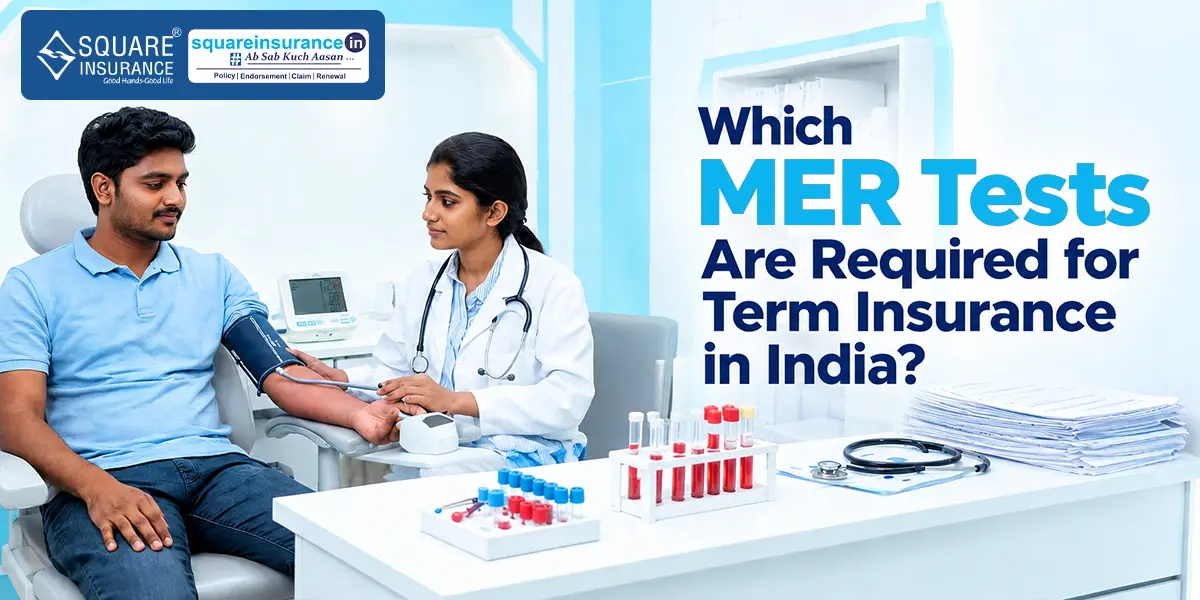
- MER stands for Medical Examination Report and helps insurers assess your health.
- Common medical tests for term insurance include blood tests, urine tests, BMI, and blood pressure checks.
- Additional tests, such as ECG and TMT, depend on your age, health, and sum assured.
- Medical test results can affect your premium, coverage, and policy approval.
- A medical check-up is not mandatory for every applicant, as requirements vary by insurer.
When you apply for a term insurance policy in India, the insurer may ask you to undergo a medical examination before issuing the policy. The tests help the insurance company decide if an applicant is eligible for the policy.
The MER is an important part of term insurance. The medical test for term insurance may include blood tests, urine analysis, blood pressure measurement, and heart-related examinations. Understanding the MER process can help you prepare for a medical checkup and complete your insurance application.
What Is MER in Term Insurance?
MER stands for Medical Examination Report. It consists of all information regarding your health status on the basis of medical examination, tests, and medical history. Insurance companies use this report during the underwriting process. This includes your height, weight, blood pressure, lifestyle, etc.
Which MER Tests Are Required for Term Insurance?
The medical checkup for term insurance varies from person to person. Here are some of the tests an insurer may ask for:
1Physical Examination
A physical examination helps assess basic health indicators. It may include:
- Height and weight measurements
- Body Mass Index (BMI) calculation
- Blood pressure measurement
- Questions about your medical history and lifestyle
2Blood Tests
Blood tests help assess blood sugar, cholesterol and organ function. Common tests include:
| Blood test | What it checks |
|---|---|
| Complete Blood Count (CBC) | Measures red blood cells, white blood cells, and platelets. It can help identify anemia and certain infections or blood disorders. |
| Blood sugar test | Checks glucose levels to identify signs of diabetes or elevated blood sugar. |
| HbA1c test | Measures average blood sugar levels over approximately the previous two to three months. |
| Lipid profile | Measures cholesterol and triglycerides to assess cardiovascular risk. |
| Liver Function Test (LFT) | Checks liver health and identifies signs of possible liver problems. |
| Kidney Function Test (KFT) | Measures kidney function using blood markers. |
3Urine Test
A urine test is done to detect levels of glucose, protein, and blood. This can determine possible cases of diabetes, renal malfunction, or abnormalities in the urinary tract.
The insurance company may ask for further tests of the urine if the first results are not satisfactory.
4Electrocardiogram (ECG)
An ECG is a test that records the electrical activity of the heart. It helps in detecting abnormal heartbeats and other irregularities that may need further investigations.
The insurer could ask for an ECG according to your age, your state of health, or the coverage amount.
5Treadmill Test (TMT)
A Treadmill Test checks the functioning of your heart. This test records how your heart responds to physical activity.
A treadmill test is often used when more information is needed about your heart. This is not always necessary for everyone who applies for coverage.
6Additional Medical Tests
Some people may need more tests, depending on their health profile and the insurer's assessment. These may include:
- Chest X-ray
- Ultrasound or other imaging tests
- Echocardiography
- Additional blood investigations or specialist assessments
What Determines the Medical Tests You Need?
The medical test for term insurance depends on several factors.
- Age - Older applicants may be asked to take more tests.
- Sum assured - Larger sums of insurance may require further investigations.
- Pre-existing medical conditions - Cases such as diabetes, high blood pressure, or heart problems may require additional testing.
- Lifestyle - Smoking and excessive alcohol consumption can also be a factor.
- Family medical history - A family history of certain illnesses may also be taken into account.
How Do MER Test Results Affect Your Policy?
The company reviews your medical reports and the ones you provided in the application. Based on the results, they might do the following:
- Approve the application at the requested premium.
- Approve the application at a higher premium.
- Ask for more tests or records.
- Postpone the decision until they receive more information.
- Decline the application if the risk isn't suitable for them.
Having an abnormal test result doesn't necessarily mean declining. They have to review the results in the context of the entire application.
How to Prepare for a Medical Check-Up for Term Insurance?
Follow these steps to ensure an easy examination procedure:
- Check instructions: See if there are any instructions on whether you need to fast or avoid certain foods and drinks for the examination.
- Give medical history: Provide the doctor with a list of all the existing medical problems and the medications and surgeries you have undergone.
- Bring necessary records: Always carry the necessary test reports or the prescriptions you have been given, if you are asked to bring it along.
- Follow guidelines: Avoid consumption of alcohol or heavy exercise before the tests.
- Set an appointment: Ensure that you set a date and time for your appointment and go through with the tests recommended.
Do not stop or change medication on your own: Only stop or change the dose of your medication on the advice of your doctor.
Is a Medical Test Mandatory for Term Insurance in India?
No, a medical examination is not mandatory for all term insurance applicants. Some insurers provide policies without any kind of physical test and depend upon the eligibility and underwriting criteria.
However, an insurer may request tests based on your age, the information provided, lifestyle, or desired coverage. Even if an individual does not require a physical examination, they must provide all medical information accurately and answer the questions correctly.
Conclusion
MER tests help insurers assess your health before issuing term insurance. Common medical exams include physical exams, blood and urine tests. Some cases require ECG, treadmill tests, and specific tests.
The type of medical examination required for a term insurance depends on the profile of the applicant and the requirements of the insurer. You must comply with the instructions provided and give your honest response along with completing the investigations requested by the insurer.
FAQs
MER stands for Medical Examination Report. It refers to the relevant health information and test results that are used by the insurance agencies to underwrite the policy.
Most insurers ask for tests such as BMI and blood pressure checks, blood and urine tests. ECG, treadmill, and other special tests for some applicants.
Some term life insurance products are designed to be free of medical examination. It is important to understand your eligibility based on your personal circumstances.
Any abnormal test may result in any of the following actions by the insurance company. However, a single abnormal test does not necessarily mean automatic rejection.
The insurance companies usually arrange and pay for the tests through their own medical networks.


