
 2094*
By clicking on You, Agreed to our Privacy Policy & Terms of use *Disclaimer
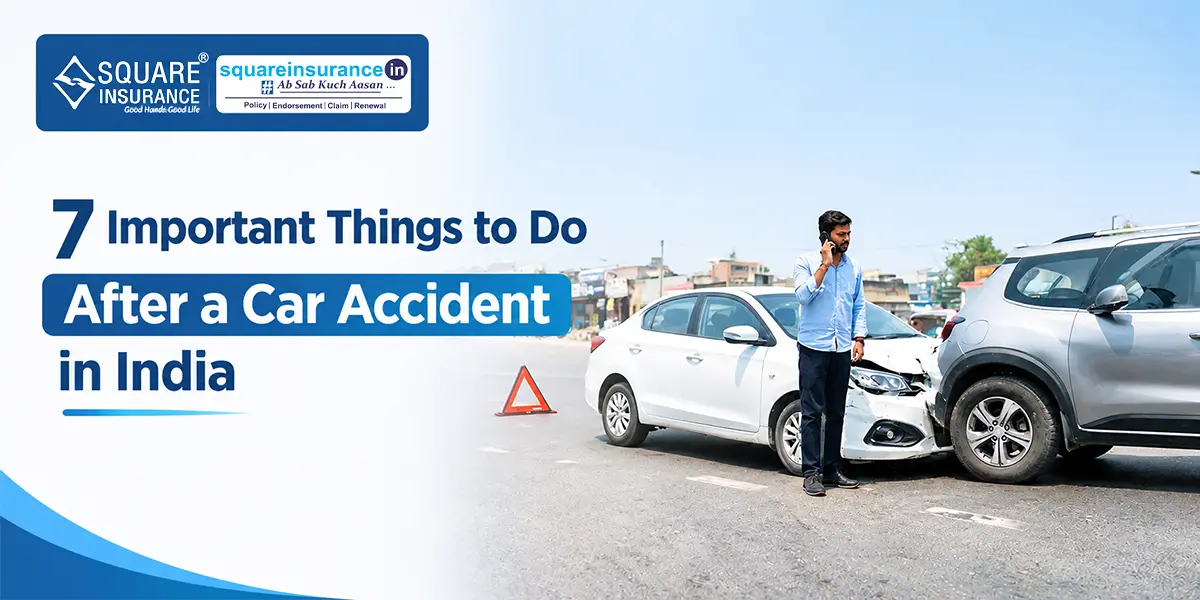
- Stop your vehicle, switch on hazard lights, and ensure everyone's safety after an accident.
- Call 112 for emergency assistance if anyone is injured or needs immediate help.
- Inform the police and file an FIR wherever legally required.
- Exchange contact, driving licence, and insurance details with the other driver.
- Take photographs of vehicle damage, road conditions, and the accident scene.
- Inform your car insurance company promptly and follow its claim procedure.
A car accident can happen even when you follow traffic rules and drive carefully. But knowing what to do after that can help you handle the situation better. It can help you protect yourself, help others, and handle the legal and insurance procedures correctly.
India has recorded 5,13,474 road accidents in 2025. By 27 July 2026, the country had already recorded 2,96,447 road accidents, according to the Ministry of Road Transport and Highways (MoRTH). If you are involved in a road accident, prioritise the safety of everyone before dealing with vehicle damage or insurance claims.
Here are seven important things to do after a car accident in India.
What are the Important Things to Do After a Car Accident in India?
These are some of the things you should do after a car accident.
1Stop the Car and Check for Injuries
The first thing to do after a car accident is to stop your vehicle. Do not drive away from the accident spot, even if the damage appears minor.
Follow these precautions:
- Switch on your hazard lights to alert other drivers.
- Turn off the engine to reduce the risk of fire.
- Move your car to a safe place if it is blocking traffic and moving it is safe.
- Avoid standing in the middle of the road or near moving traffic.
If the accident involves serious damage or injuries, avoid moving the vehicles unless it is necessary for safety or the police tell you to.
2Call Emergency Services and Get Medical Help
If anyone is injured, call for medical help immediately. You can dial 112 for emergency services. Share your location, the number of injured people, and the type of emergency with the operator.
Even if they seem like minor injuries, some injuries can take a while to develop symptoms. It is important to get medical help. Save any medical reports, prescriptions, and hospital bills, as they can be useful when claiming on insurance.
Under section 134 of the Motor Vehicles Act, 1988, drivers of vehicles involved in an accident causing injury or damage to third-party property have certain duties to take reasonable steps to ensure that injured persons receive medical attention.
3Inform the Police and File an FIR, If Required
Contact the traffic police or nearest police station. If there have been any injuries, deaths, serious damage, or there is any dispute, it is very important to involve the police.
Under Section 134 of the Motor Vehicles Act, any injury to a person or damage to third-party property must be reported to the nearest police station as soon as possible. If there isn’t a police officer on site, you must report within 24 hours.
Give the police details of what happened. They will ask for information, so make sure you give them everything they need. If an FIR is registered, obtain a copy of the report. This can help to show what happened during the accident and can help with your insurance claim.
4Exchange Contact and Insurance Details
If another vehicle is involved, exchange contact and vehicle details with the other driver. Collect the following information:
- Full name and contact number
- Vehicle registration number
- Driving licence details
- car insurance company and policy number
- Vehicle make and model
Give the other driver your details also. Don’t get into an argument with them or assume who was at fault. Let the police and insurance companies decide what happened.
5Collect Evidence and Photograph the Accident Scene
Take photographs and videos to help determine what caused the accident and how much damage was caused to the vehicle(s). Collect evidence before moving the vehicles, provided the area is safe.
Use your phone to capture:
- Damage to all vehicles involved from different angles.
- Vehicle registration plates.
- The accident spot and surrounding road conditions.
- Traffic signs, road markings, and visible skid marks.
- Any visible injuries, where appropriate.
Also note down details of any witnesses, including their name and contact number. If you have a dashcam in your vehicle, make sure to save the footage.
Make sure to keep this information safe, as it may be requested by your insurance company or police.
6Inform Your Car Insurance Company
Once the immediate situation is under control, inform your car insurance company about the accident. Report the incident as soon as possible and follow the claim notification timeline mentioned in your policy.
Give an overview of what happened in the accident and how your car has been damaged. They will let you know what to do next and what information and documents you need to provide to make a claim. This could include:
- Car insurance policy copy
- Registration Certificate (RC)
- Driving licence
- FIR or police report, if applicable
- Accident photographs
- Repair estimate and other supporting documents
Keep your claim reference number and copies of all submitted documents for future communication.
7Get the Car Inspected and Complete the Insurance claim
Once the claim has been recorded, the insurance company may send their own surveyor to check over your car. You will need to wait for this inspection and approval to be carried out (unless urgent repairs are required)
Your car can usually be repaired using one of the following methods:
- Cashless claim: Your car will be taken to an insurer’s network garage. Once approved, they will pay the garage directly for the repairs (minus any deductions).
- Reimbursement claim: Your car will be repaired by a non-network garage. You will pay the garage for repairs and send the required documentation to the insurer.
The total amount you will receive for your car insurance claim will depend on your policy, any exclusions, deductibles, and other terms. All repair bills and proof of payment should be kept until your claim has been settled.
Common Mistakes to Avoid After a Car Accident
Avoid making any of the following mistakes:
- Leaving the scene of the accident
- Not getting medical attention
- Not gathering any photographs or evidence
- Not informing your insurer as soon as possible
- Starting repairs without allowing your insurer to inspect
- Giving incomplete or incorrect details when registering your claim
How to Avoid Car Accidents While Driving the Car?
It is important to know what to do if there is an accident. But by taking precautions, you can avoid the risk altogether. Here are some of the simple tips that will help you stay safe on the road.
- Obey all traffic signals - Always follow the traffic signals, road signs, and speed limits. Avoid running red lights and making sudden turns.
- Maintain a safe distance - Leave plenty of room between you and the vehicle in front so you can react quickly if they brake suddenly.
- Avoid distractions - Don’t use your phone, change GPS, or do anything that takes your focus away from driving.
- Drive according to road conditions - Slow down in the rain, fog, and low visibility. Be cautious on slippery roads and sharp turns.
- Wear seatbelts - Ensure everyone in the car is wearing their seatbelt.
- Avoid driving when you are tired - Take breaks throughout long journeys. Do not drive if you’re sleepy, or if you’re under the influence of any alcohol or impairing substances.
Keep your car in good condition - Regularly check the brakes, tyres, lights, and mirrors of your car to make sure that it is safe to drive.
Conclusion
A car accident can be a stressful situation to deal with. However, by carrying out the correct steps, you will be able to safely manage the situation. Make sure that you check for any injuries, call emergency services if required, notify the police if necessary, and gather any evidence. You should also notify your insurer as soon as possible and follow the correct claims process.
If you have the correct car insurance policy, then it can help you cover any costs of repairs and third-party liabilities. Make sure you understand what your policy covers, what it doesn’t cover, and how to make a claim.
Immediately stop your vehicle, switch on the hazard lights, and ensure that everyone is okay. If there is a need for emergency assistance, then call 112. After ensuring that everyone is safe, inform the police and notify your insurance company.
It is not compulsory to file an FIR for minor accidents. However, if anyone has been injured or killed, or if third-party property has been damaged, etc., then it is important that you report it to the police.
As soon as possible. Check your insurance policy for when you should report a claim and do as instructed.
If the accident was a minor own-damage claim, then in most cases you can make a claim without an FIR. However, if there were any injuries, deaths, third-party damage or hit and run then the correct police reporting must be done.
It is better to wait for the insurer's inspection and approval before starting repairs. If emergency repairs are necessary to prevent further damage, inform your insurer and keep photographs, bills, and other supporting records.
 2094*
By clicking on You, Agreed to our Privacy Policy & Terms of use *Disclaimer
- 5.5 CrRegistered Consumers
- 50+Insurance Partners
- 3.4 CrPolicies Sold


