
 2094*
2094*By clicking on You, Agreed to our Privacy Policy & Terms of use *Disclaimer
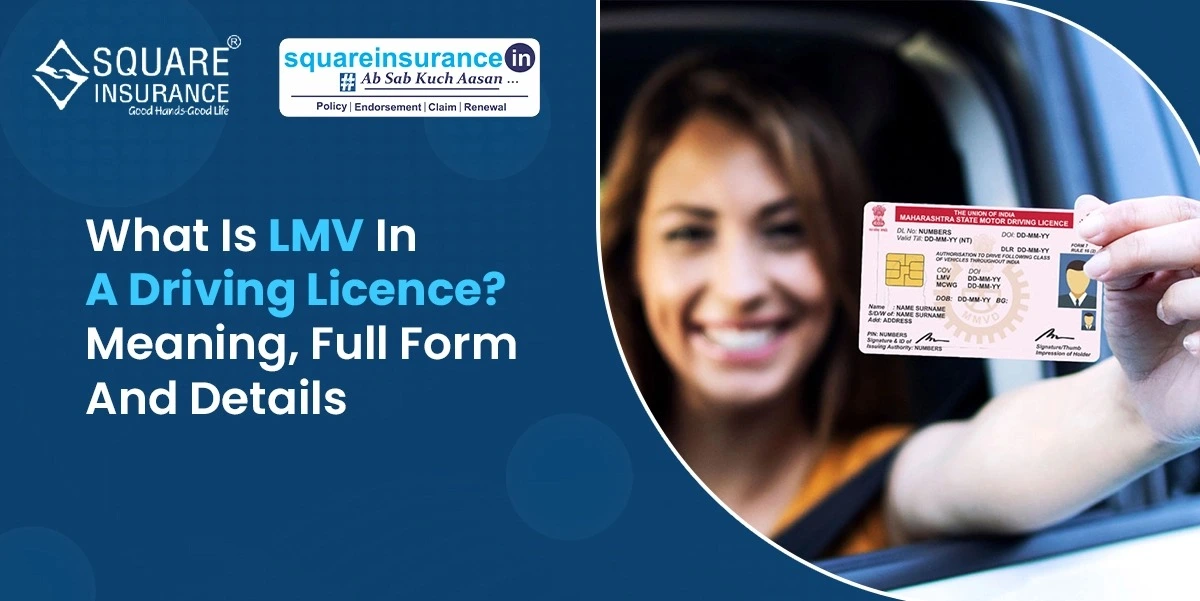
There are many terms we come across in daily life that we may not be familiar with. One such term is LMV, which is commonly mentioned on a driving licence. LMV stands for Light Motor Vehicle and refers to a specific category of vehicles you are legally allowed to drive.
Understanding the LMV meaning on a driving licence is important, as it helps you know what type of vehicles you can drive. This also helps you follow traffic rules correctly.
This blog will help you understand the LMV meaning and importance in a better way.
LMV Meaning in Driving Licence
The full form of LMV is Light Motor Vehicle. LMV in DL indicates that a person is legally permitted to drive light motor vehicles on the road. These vehicles include cars, jeeps, vans, and small transport vehicles that fall within a 7500 kg weight limit.
Vehicles under this category do not include heavy vehicles like trucks or buses. However, LMVs can be used as transport or non-transport vehicles on the road. No separate endorsement is required to drive commercial or transport LMVs.
Light Motor Vehicle List
Here is the list of LMV:
- Car
- Jeep
- Van
- Hatchback
- Sedan
- SUV (within permitted weight limit)
- Pickup van
- Delivery van
- Small goods carrier
- Private light commercial vehicle
Eligibility Criteria for Obtaining an LMV Driving Licence
To apply for an LMV driving licence in India, you must meet these basic requirements:
- You must be at least 18 years old. For commercial licences, the age should be 20.
- You must pass the driving test conducted by the RTO.
- You must clear a written test on traffic rules and road signs.
- You need valid ID proof, address proof, and age proof documents.
- The required application and test fees must be paid.
- You should be medically fit, with good eyesight and no serious health issues.
- For a commercial LMV licence, additional fitness tests may be required.
Benefits of Having a Valid LMV Driving Licence
Having a valid LMV driving licence comes with many advantages:
- Legal permission A valid driving licence is required to drive a light motor vehicle on public roads. Driving without it can lead to fines and legal trouble.
- Freedom and convenience A driving licence allows you to drive your own vehicle for work, daily tasks, or travel, without depending on others.
- Better job options An LMV licence can help you get jobs such as a personal driver, a taxi driver, or work with ride-hailing services like Ola or Uber.
- Option to upgrade later With an LMV licence, you can upgrade to a commercial driving licence if you plan to drive public or commercial vehicles in the future.
- Easy personal mobility If you own a car, a valid licence lets you drive it legally anytime, giving you comfort and flexibility.
What is the Online Application Process for the LMV Driving Licence?
Here are the steps for the online application process for the LMV driving licence:
- Step 1: Visit the Sarathi portal of the Ministry of Road Transport and Highways.
- Step 2: Fill in the application form with your personal details and select LMV as the vehicle type.
- Step 3: Upload the required documents, such as age proof, address proof, medical certificate, and photographs.
- Step 4: Pay the application fee online using a debit card, a credit card, or net banking.
- Step 5: Book a driving test at your nearest RTO.
- Step 6: Appear for the driving test on the scheduled date.
- Step 7: After passing the test, your LMV driving licence will be issued.
Easy Steps for Offline Application for LMV Driving Licence
Here are the steps for the offline application process for the LMV driving licence:
- Step 1: Visit your nearest RTO and collect the driving licence application form.
- Step 2: Fill in the form carefully with the correct details.
- Step 3: Submit the required documents, such as proof of age and address.
- Step 4: Pay the application fee at the RTO counter.
- Step 5: Book your driving test after document verification.
- Step 6: Appear for the driving test on the given date.
- Step 7: Once you pass the test, your LMV driving licence will be issued.
What Is the LMV Weight Limit?
In India, the LMV (Light Motor Vehicle) weight limit means the maximum weight a vehicle can have to be classified as an LMV. As per Indian motor vehicle rules, a vehicle is considered an LMV if its Gross Vehicle Weight (GVW) does not exceed 7,500 kg.
LMV licence becomes compulsory for anyone who wants to drive an LMV vehicle. Vehicles above this limit require a heavy vehicle licence.
Difference Between LMV, HMV, and MCWG
| Feature | LMV (Light Motor Vehicle) | HMV (Heavy Motor Vehicle) | MCWG (Motorcycle With Gear) |
|---|---|---|---|
| Vehicle Type | Light four-wheelers | Heavy commercial vehicles | Two-wheelers with gears |
| Examples | Cars, vans, small goods vehicles | Trucks, buses, trailers | Bikes and motorcycles |
| Weight Limit | Up to 7,500 kg GVW | Above 7,500 kg GVW | Not based on weight |
| Licence Required | LMV driving licence | HMV driving licence | MCWG driving licence |
| Usage | Personal and light commercial use | Commercial and transport use | Personal commuting |
| Driving Skill Level | Basic to moderate | Advanced | Moderate |
| Minimum Age | 18 years | Usually 20 years | 18 years |
Difference Between LMV-NT and LMV-TR (Non-Transport and Transport Vehicle)
| Point | LMV-NT (Non-Transport) | LMV-TR (Transport) |
|---|---|---|
| Meaning | LMV-NT is a licence for personal use vehicles. | LMV-TR is a licence for commercial or business use vehicles. |
| Vehicle Use | Used for private driving only. | Used for carrying goods or passengers for payment. |
| Type of Vehicles | Private cars, personal jeeps, and private vans. | Taxis, goods carriers, and commercial vans. |
| Commercial Use | Commercial driving is not allowed. | Commercial driving is allowed. |
| Badge Requirement | No commercial badge is required. | A commercial badge may be required as per RTO rules. |
| Validity Period | Usually valid for 20 years or up to age 50. | Usually valid for 3 to 5 years, depending on the rules. |
| Endorsement | No transport endorsement is needed. | Transport endorsement is required. |
Conclusion
This blog helps enhance your understanding of the LMV category in a driving licence. With it, you will not be troubled on the roads while checking, and also be legally safe.
Knowing what LMV stands for, the types of vehicles it covers, and the related rules helps you drive with clarity. It also ensures that you follow traffic regulations, avoid penalties, and choose the right licence category for your vehicle. Overall, understanding LMV makes everyday driving simpler and stress-free.
FAQs
LMV stands for Light Motor Vehicle. It means you are allowed to drive light vehicles like cars, vans, and small goods vehicles.
Vehicles such as cars, jeeps, vans, and light commercial vehicles within the allowed weight limit come under LMV.
In India, a vehicle is considered an LMV if its gross vehicle weight does not exceed 7,500 kg.
Yes, you need a valid LMV driving licence to drive a car legally.
Yes, you can drive light commercial vehicles that fall under the LMV category, subject to licence rules.
 2094*
2094*By clicking on You, Agreed to our Privacy Policy & Terms of use *Disclaimer
- 5.5 CrRegistered Consumers
- 50+Insurance Partners
- 3.4 CrPolicies Sold


